
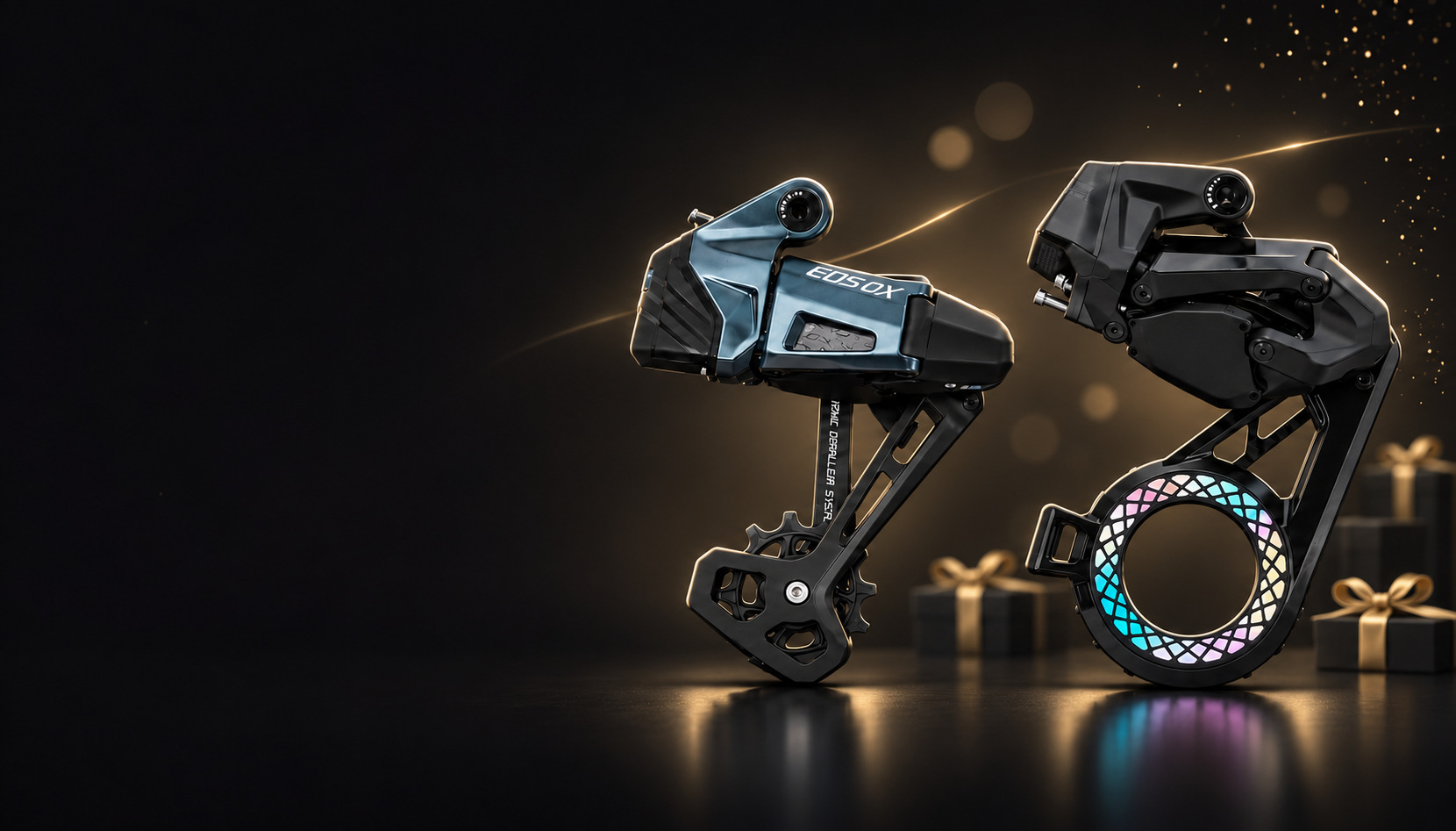
WHEELTOP EDS TX Long-Term Review by Noakes Reviews
What the video covers
This article is based on a video by Noakes Reviews. He looks at the WHEELTOP EDS TX, WHEELTOP's road groupset, and focuses on what stands out for him against a typical wireless setup: you choose how many gears you have in the app, instead of being locked to a single cassette speed. He has watched groupsets move from 8-speed up through 13-speed, and each time a new cassette arrives, other systems often need new parts to match. On the EDS TX, you set the speed count in the app, up to 14-speed, which he sees as more future-proof.
The kit he is talking about is the shifters, front derailleur and rear derailleur. He has reviewed WHEELTOP's carbon crank separately and does not cover it in detail here.
Shifters and the rear derailleur
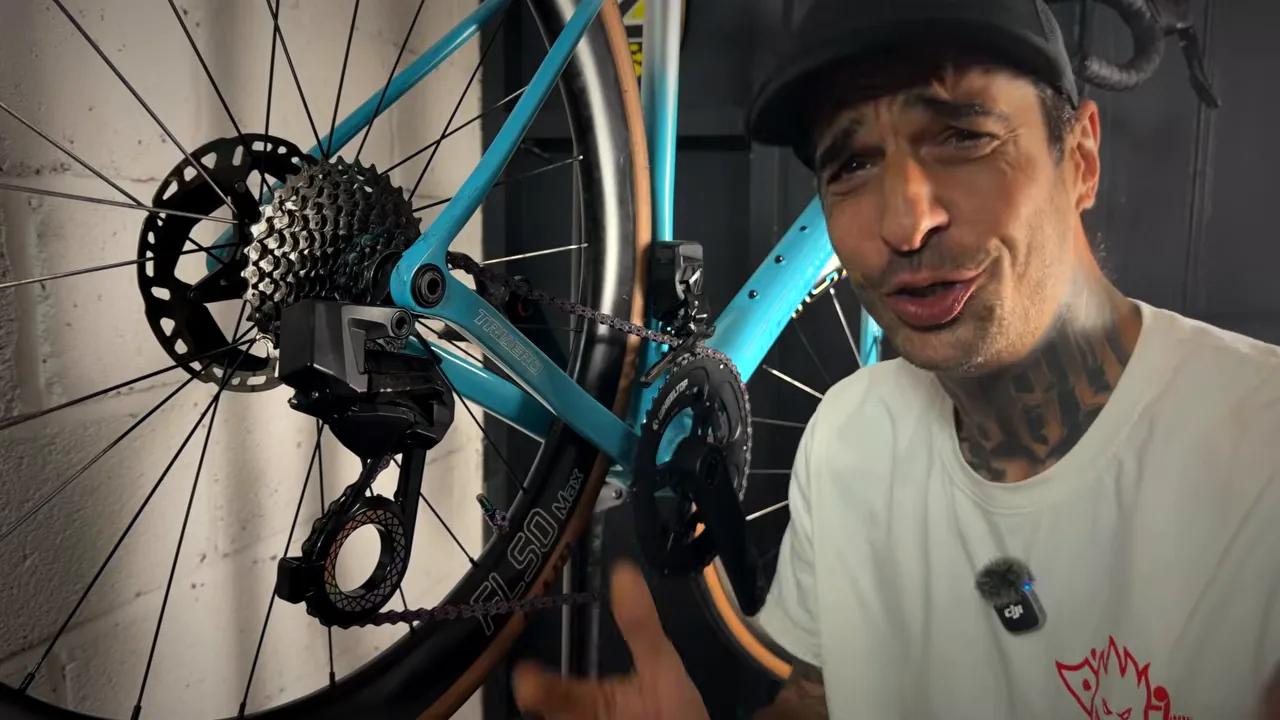
The shifters are full carbon. He finds them responsive, with a comfortable, compact shape. He compares the small hoods to current SRAM Red hoods, and even with large hands he still finds them comfortable. Each button can be remapped: the right side for the rear cassette, in either direction, and the left for the front chainring. Reach is adjustable under the hood. The one downside he flags is that the hood plastic is very stiff. That should stop it stretching over time, but it also makes the hoods hard work when you want to bleed the brakes yourself.
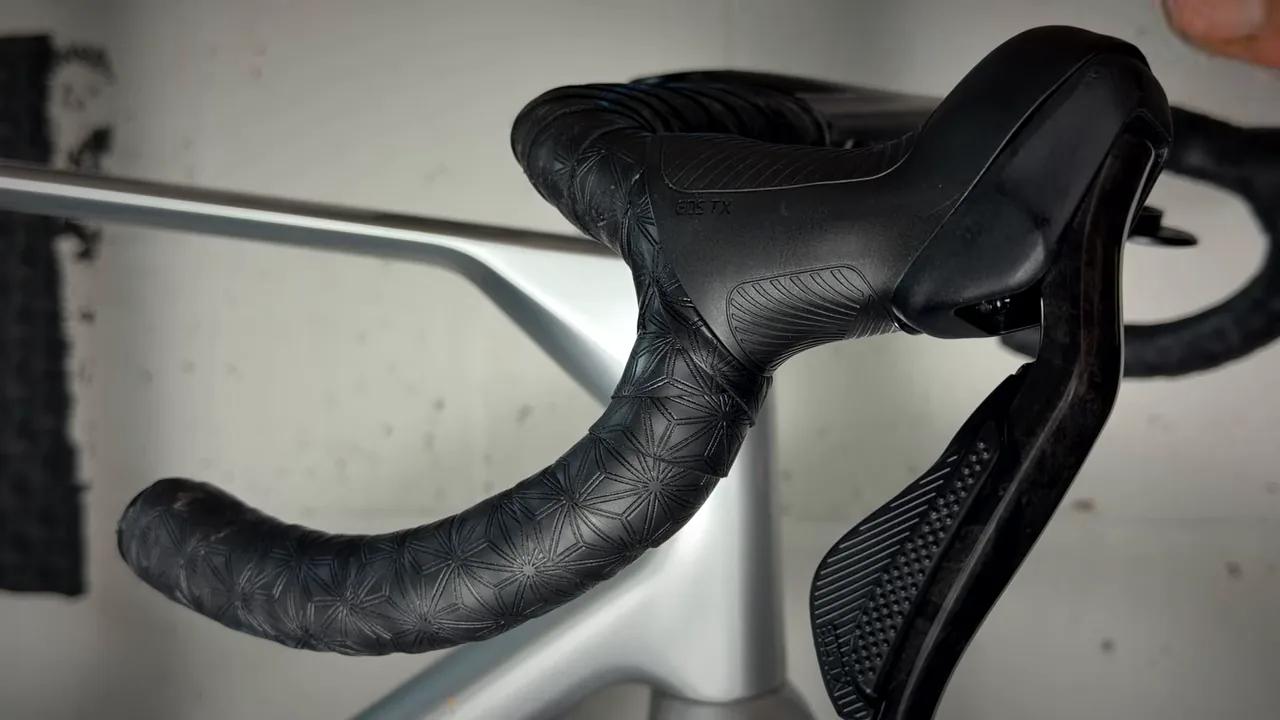
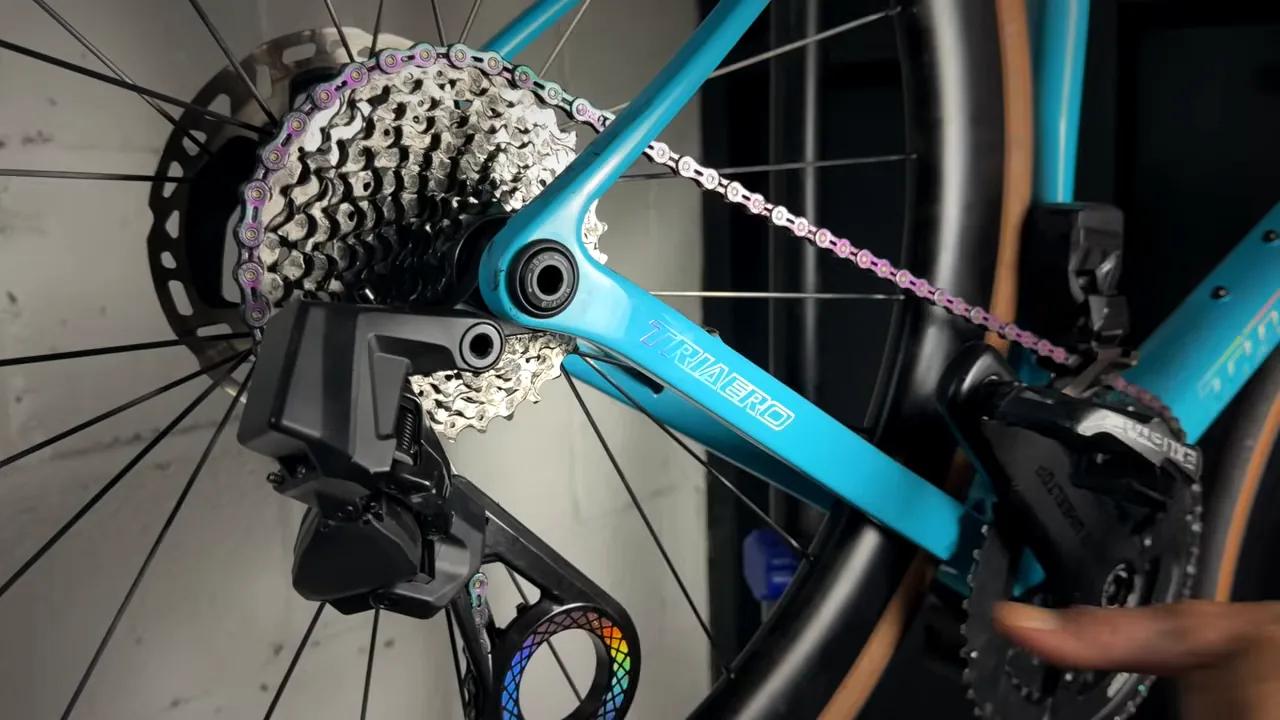
He calls the rear derailleur a bit chunky, and he likes how it looks. The derailleur in this video is not stock: he has fitted an oversized pulley wheel, so the cage you see is his upgrade.
Fine-tuning in the app
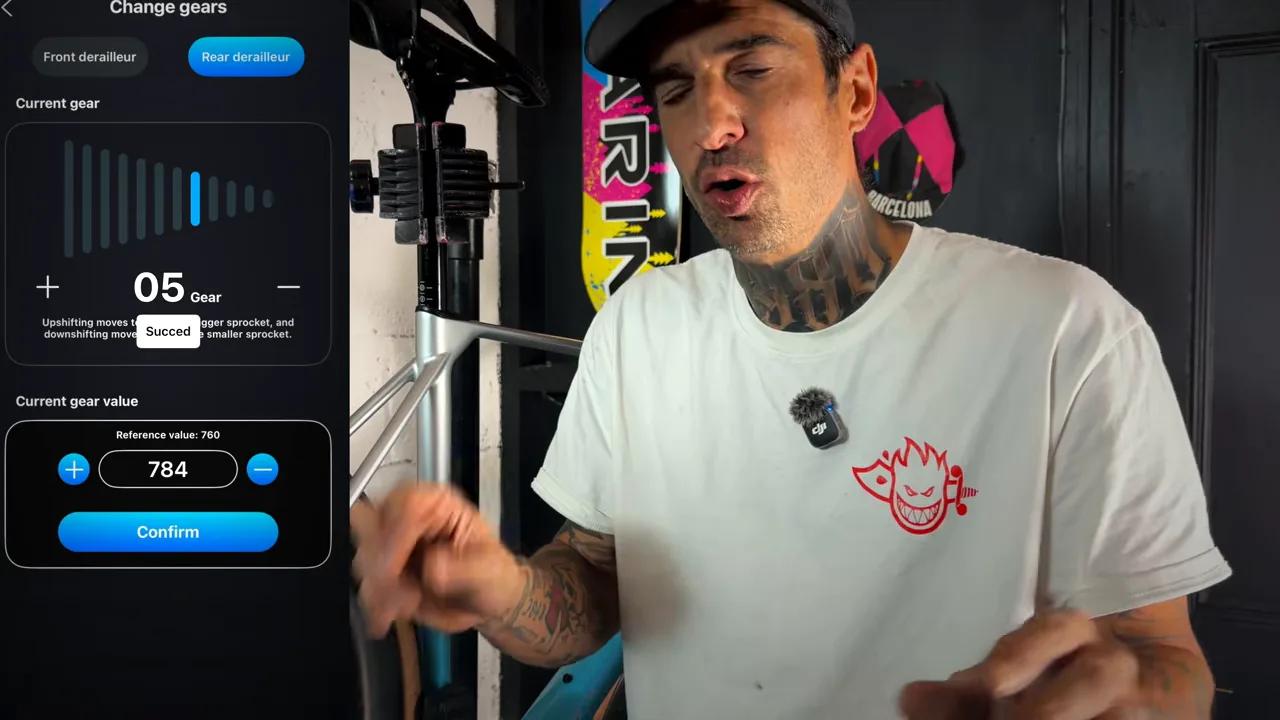
The same adjustability that makes the system flexible also means more faff than a fixed-speed wireless groupset. It is not a case of tapping 11-speed and riding away. You go into the app and fine-tune each gear, moving the derailleur a fraction left or right if one cog ticks. That took him a fair amount of trial and error, and he now talks through a simpler way to do it.
Open fine-tuning, go through the gears, and watch the number at the bottom of the screen. He changes it in steps of five, up or down. If a tick gets worse after a change of five, he goes the other way. The change only applies once you shift out of that gear and back into it. A step of 10, then an upshift and a downshift, will tell you if the tick is better or worse. It is still a little trial and error, but he says it does not take long, and it is useful after a crash if a bent derailleur has the gears jumping: you can get the bike rideable enough to get home, something he does not think other brands let you do in the same way.
The app can be a bit much at first. Once you get used to it, he says it works well.
How it shifts
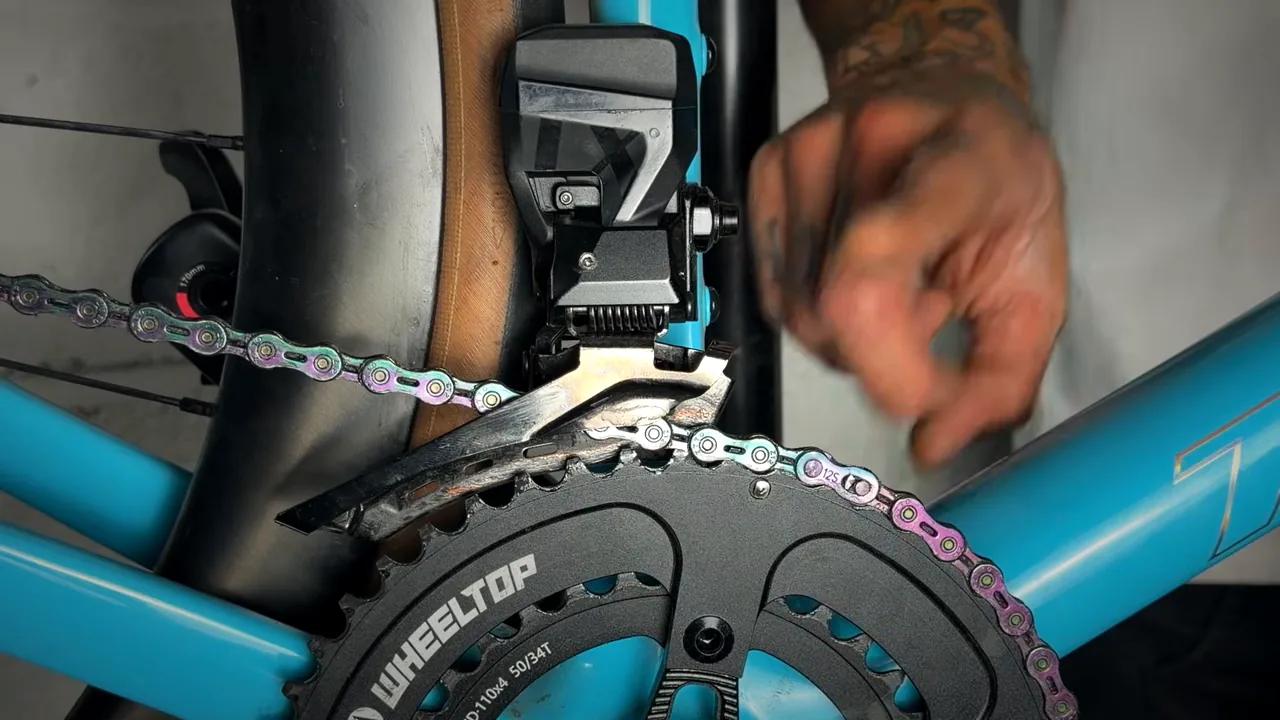
Once the fine-tuning is done, he says it functions perfectly. No slipping, no ticking, and the chain stays on the rings whether he is in the big ring or the small one. A hard shift from a heavy gear into the small ring on a hill is, in his experience, quick and clean.
The system will not let you use the smallest cog on the smallest ring. You can, however, run big ring and big cog, which he thinks puts a lot of stress on the drivetrain, and he is not sure why one combination is blocked and the other is not. There is also auto-trim: the front derailleur nudges over as you move across the cassette.
Shift speed is decent, he says, and a little slower than SRAM in the normal setting. Race mode makes it very fast and snappy. He does not use that day to day, but he would turn it on for a race. The catch is that in race mode the system stays on and will not go into standby, so it will drain the battery unless you turn it off after the ride.
Firmware updates keep coming, and he has noticed the shifting get better with each one.
Things to keep in mind
The main trade-off is setup. It is not hugely complicated, but it is not as straightforward as the big brands, because you have all that customization to learn. He leaves the choice with the viewer: a simpler install from a known brand, or more adjustability from a lesser-known one, once you have spent the time to understand it.
Verdict
After living with the EDS TX, he is happy with the shifting once it is tuned, the compact carbon hoods, and the fact that the speed count can be changed later. The stiff hoods, the extra app work, and the race-mode battery behaviour are the points he wants people to know about up front.
This article is based on Noakes Reviews' video. Watch the original video above, published 9 September 2026.
Shop Now
- New


