
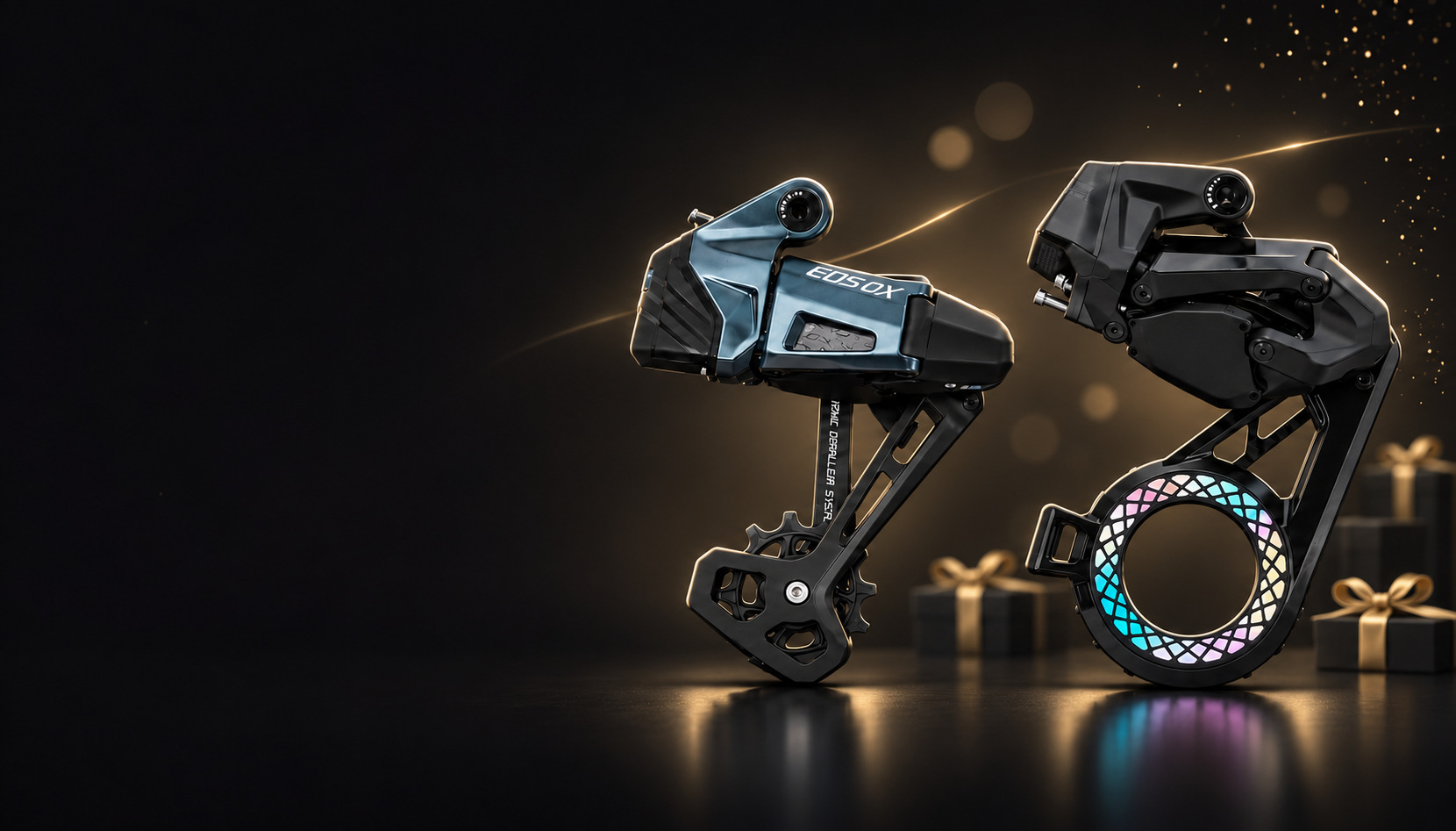
WHEELTOP GeX Six-Month Race Review by Tom Bowers Cycling
What the video covers
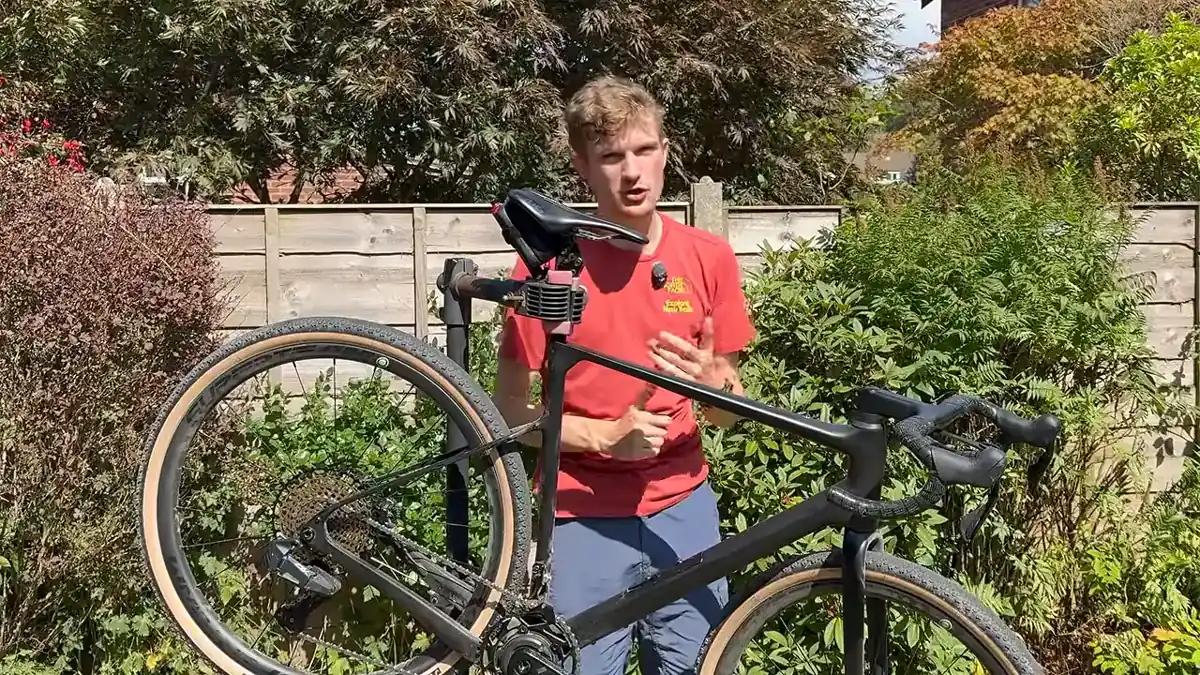
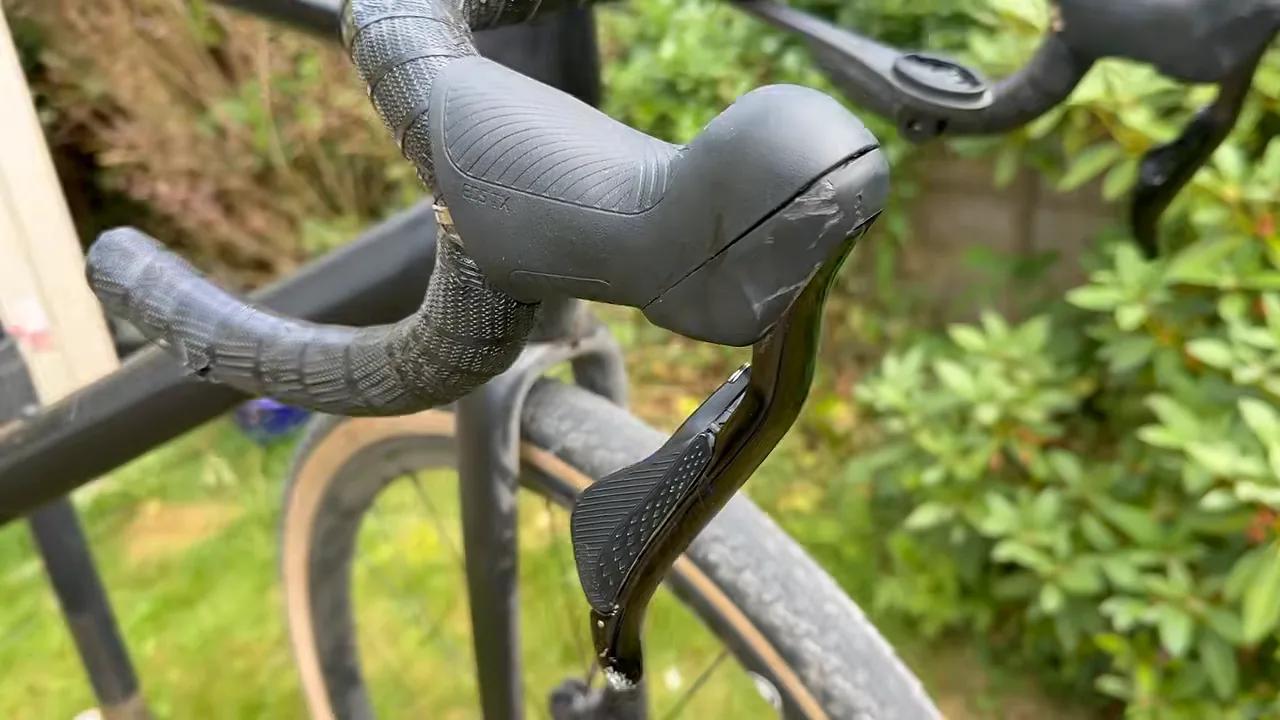
This article is based on a video by Tom Bowers Cycling. He has been running the WHEELTOP GeX on his gravel race bike for six months, through training, The Gralloch, the Dirty Reiver, and a fairly nasty crash that left scrapes and dings on the shifters. After all of that, he wants to know whether it can really take on SRAM AXS.
His build is the alloy shifter option, the standard 7800-series brakes (not the Pro), and a 93 mm long-cage rear derailleur meant for 50- and 52-tooth mountain cassettes. He has used a SPEEDAO 10-50 cassette the whole time with no complaints. Rotors are 160 mm front and rear, with a 44-tooth chainring on a ThinkRider PP5 crank.
Install and the app
He was genuinely impressed with the mechanical side of the install: bolt the shifters on, run the hoses through the frame, and screw on the rear derailleur, which he finds much less faff than routing Di2 wires. The brakes came pre-filled. He just screwed the hoses into the shifters, and they worked, though the manufacturer still recommends an initial bleed.
The app is where he says the rough edges show. It is not the slickest, but it is perfectly functional and offers a lot of customization, including per-sprocket tuning that can send you down a rabbit hole. On his first attempt he got it so wrong he had to factory-reset the system. The second time, he got it dialed in, and the B-limit and end stops were straightforward.
He has since installed SRAM E1, often described as very easy, and found that more of a palaver. He found WHEELTOP easier, probably because he is used to this kind of setup, though he would not call it easier than last-generation SRAM AXS. In his view this is a groupset for someone who will set aside an afternoon to tinker, not someone who wants a shop to deal with it.
What he can do in the app
The feature he values most is that the system is not locked to one cassette speed. In the app he can set it as 11-speed one day and 13-speed another, anywhere from 3- to 14-speed if he can find a cassette to match. He can also tweak each sprocket independently, which helps with slightly uneven cassettes or odd hub spacing.
The shifters have one paddle on the left and two on the right. The leftover left paddle can be assigned to anything; he has it set to dump him into an easier rear cog, with a normal two-button layout on the right. At first he found the single left paddle a bit confusing, but he is glad the extra button is there. There are no auxiliary buttons for changing Garmin pages, which he notes is also true of Rival-tier SRAM and 105-tier Shimano. Shift quality itself, he says, is really crisp, including in hard race situations. He generally leaves race mode on, accepting a bit less battery life for faster shifts.
Hoods and brakes
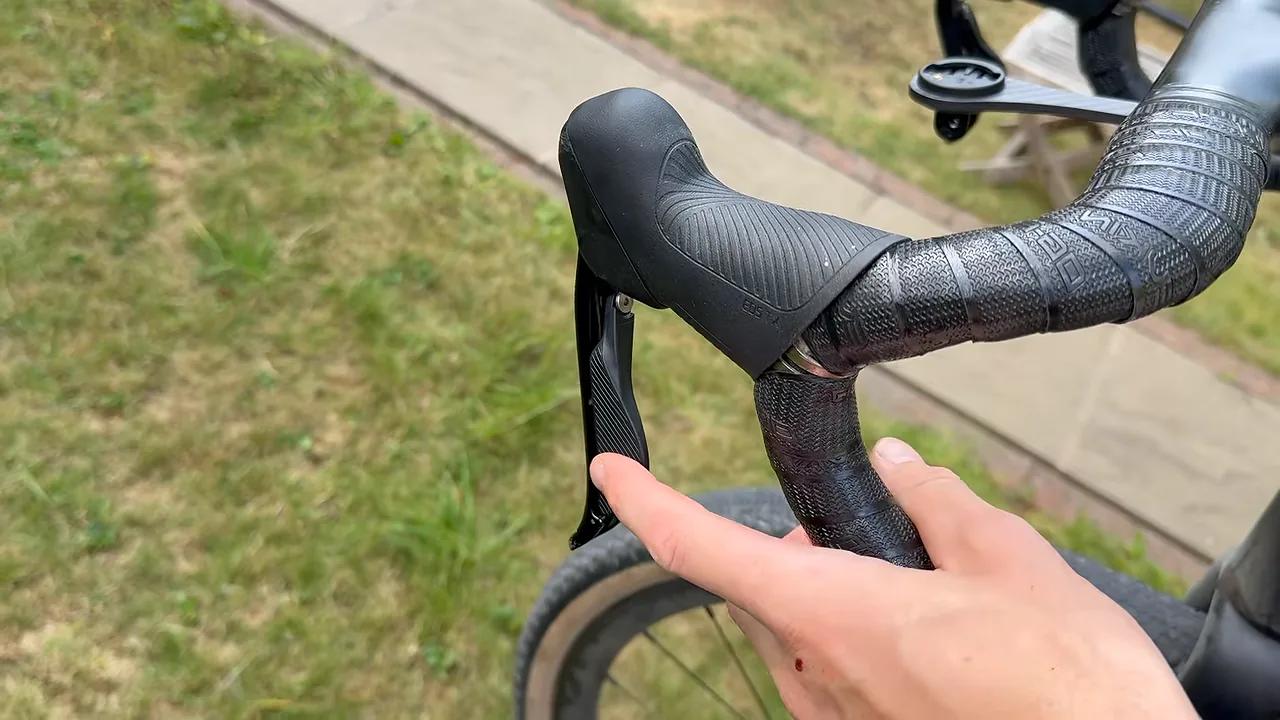
He has liked the hood ergonomics since he first built the bike. They feel quite similar to the SRAM E1 hoods he is using now, maybe a tad smaller and with a slightly shorter reach. The rubber is tactile and grippy, and soft enough that he can pull the hoods back to reach the adjustment screws. Reach in the drops is fine, and there is a reach adjustment if you need the levers closer. He keeps reaching for this bike on ordinary training rides because the front end is so comfortable, and the hoods were not an issue during 200 km events like the Dirty Reiver. The only real niggle is fit and finish: the rubber is a little flappy where it meets the plastic body, and if he really leans on it, it can pull out of place. Not a dealbreaker for him.
Braking, with the 7800-series calipers, has been spot on, and he calls the power and modulation one of the biggest strengths of the groupset. The pads are finned, and he has not had overheating problems. Most of the time he simply does not notice the brakes, which he treats as a compliment. He also prefers mineral oil to DOT fluid.

Battery, the cage, and durability
He waited this long to film the review because he wanted to give the groupset every chance to fail. The crash only left those marks on the levers, and the system still works as before.
The battery is built into the derailleur and is not designed to be swapped on the road. For him that is not a big problem, as long as he charges it fully beforehand. It lasted the full 6 hours 45 minutes of the Dirty Reiver. The one time he forgot to charge, at The Gralloch, his Garmin flagged a low rear battery in the first hour. He thinks WHEELTOP is quite aggressive with that warning: the derailleur still finished the remaining two and a half hours, plus a few rides afterwards. In his experience the warning means think about charging in the next week or so, not stop now. He cites WHEELTOP's 800 mAh figure for the cell in the derailleur.
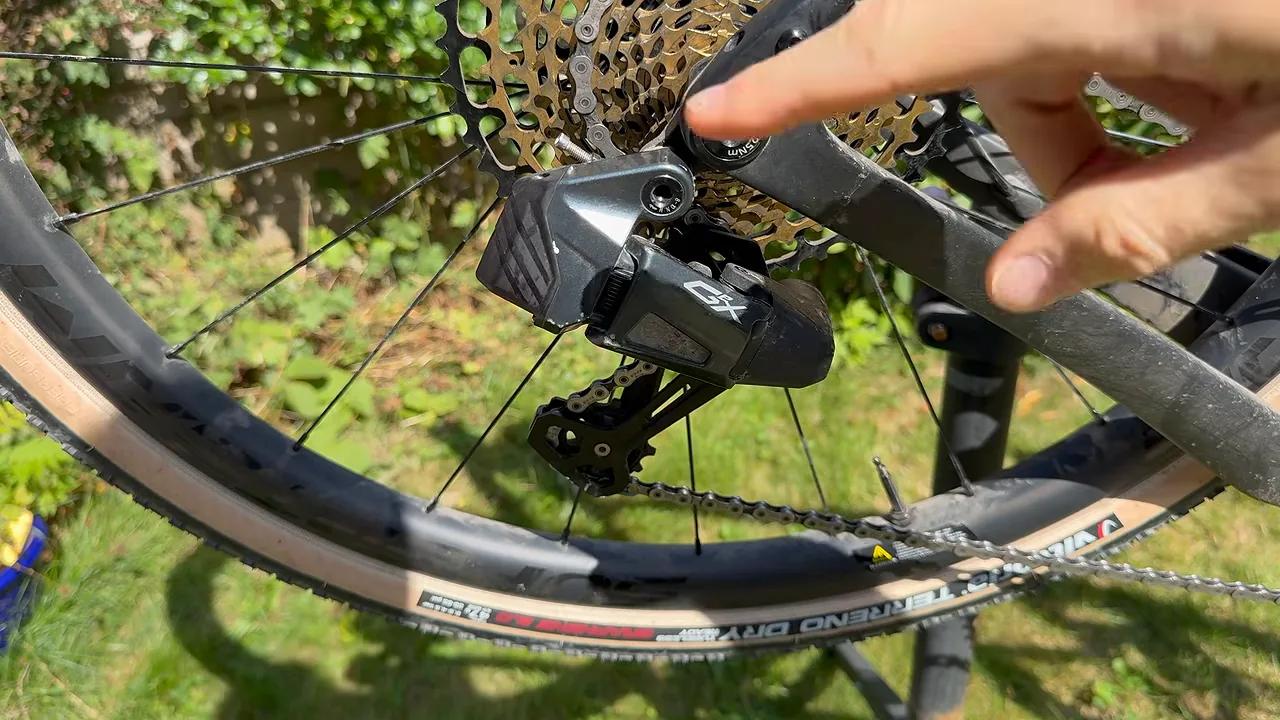
The cage is clutched, with strong spring tension, and he has dropped a chain only once, when he stopped pedaling suddenly in the 10-tooth cog on a descent at the Dirty Reiver. He is fairly sure the same thing would have happened on his old Eagle AXS setup. What he does miss is a cage lock for taking the wheel out, especially onto a turbo. He has used it in the rain with no trouble. The parts in his build, including the pre-filled brake hoses, weighed a hair over 1,200 grams. He would not choose a groupset on weight alone.
Verdict
He has had a new SRAM E1 groupset sitting unused for more than two months, because he had no real reason to take the WHEELTOP off. If you handed him the choice right now, he would lean toward the GeX. This bike has been good enough to get him around the Dirty Reiver in the fifth-fastest time this year, and to make UCI qualification in every race he has done on it, so he thinks it is good enough for most ordinary riders.
This article is based on Tom Bowers Cycling's video. Watch the original video above, published 13 August 2026.


