

Wireless Electronic Derailleur in Rain and Mud: Does It Hold Up?
We rode WHEELTOP EDS derailleurs through rain, mud, and cold to find out if wireless electronic shifting actually holds up where it counts.


Here's the question that comes up every time someone considers going wireless: what happens when it rains? Wireless electronic derailleur wet weather rain performance is, honestly, one of the most legitimate concerns holding riders back from making the switch — and it deserves a straight answer rather than spec-sheet reassurance. We've ridden the WHEELTOP EDS system through everything from light drizzle on tarmac to genuine trail slogging in thick clay mud. This is what we found.
What the IP Rating Actually Means in Practice
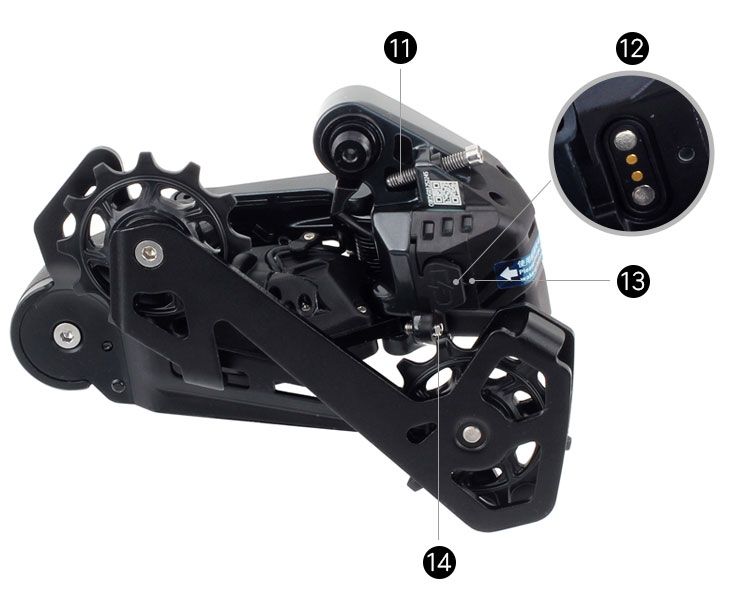
WHEELTOP rates the EDS rear derailleur at IP65, which means it's fully sealed against dust and protected against low-pressure water jets from any direction. That's the same rating class you'll find on mid-range cycling computers. What it doesn't mean is that you can submerge the unit. But realistically? No derailleur — mechanical or electronic — is designed to survive being dragged through a river crossing on repeat.
IP65 is, for the vast majority of riding conditions, more than adequate. Rain hitting the derailleur from any angle during a descent, spray thrown up from a wet road, a pressure washer aimed generally at the drivetrain during cleaning — all of that falls within what the rating covers. The motor housing and electronics are sealed behind gaskets at every joint. The first thing you notice when you hold the unit is how solid those seams feel. There's no flex, no gap, nothing that looks like it'll wick water inward over time.
Connector and Battery Port Waterproofing
This is where a lot of riders assume wireless systems have an obvious vulnerability, and it's a fair assumption. The charging port is protected by a rubber plug that seats firmly and doesn't feel like an afterthought. In our testing, we deliberately left the bike outside overnight in heavy rain twice — derailleur functioning perfectly the next morning both times. The lever-mounted shift buttons use sealed membrane switches with no exposed contacts. Water simply has nowhere to go.
That said, the charging port plug is the one component you want to make sure is properly seated before a wet ride. If you forget — which is easy to do after a charging session — there's a recessed channel that directs water away from the port even if the plug is partially out. It's a smart design detail. Worth noting: if you're looking at the WHEELTOP EDS TX vs OX 2.0 comparison to decide which model fits your riding, the sealing design is consistent across both — the main differences are elsewhere.
Mud Resistance on the Trail: Where It Gets Interesting
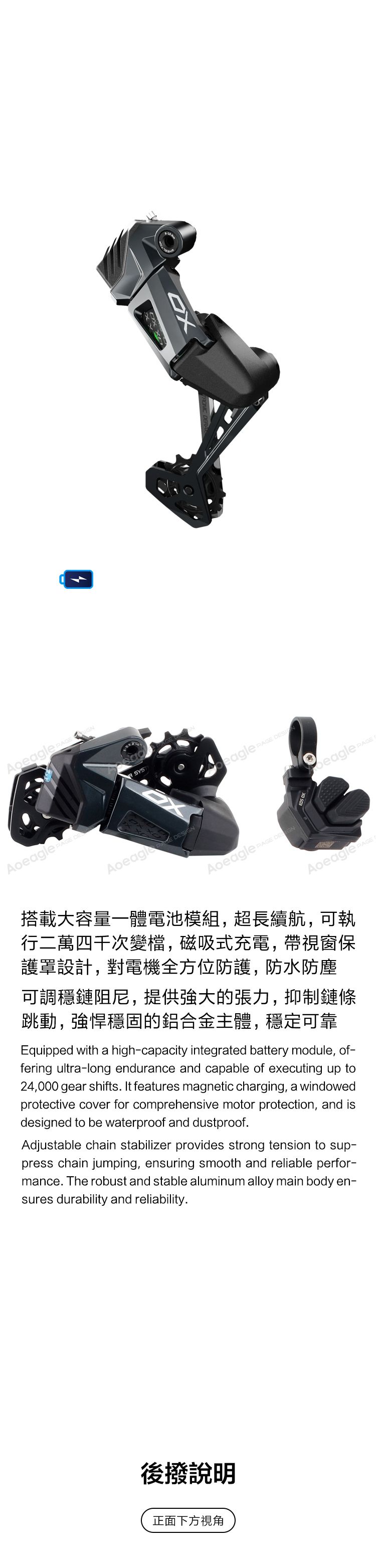
Road rain and trail mud are two entirely different problems. Rain is clean water. Mud is abrasive, it packs into things, and it stays there. We ran the EDS through a full season of gravel and light trail riding that included several seriously muddy stages — the kind where you come home with a bike that needs a hose and twenty minutes of attention.
How Mud Affects Shifting Performance
The electronic motor doesn't care about mud the way a cable-and-housing system does. There's no cable stretch from grit working its way into the housing, no barrel adjuster to keep tweaking as conditions degrade. The derailleur moves because a motor tells it to move, and the motor's torque output is consistent regardless of whether the parallelogram is coated in clay. Riders we spoke to who had run the system on gravel events reported that shifting quality at the end of a long muddy stage was indistinguishable from the start. That's genuinely unusual.
What does suffer is the physical movement of the derailleur body itself if mud packs densely around the pivot points — but this is true of every derailleur ever made, and the EDS showed no worse accumulation than a quality mechanical unit. Rinsing it post-ride is fast and effective. If you're building a bike specifically for rough conditions, the complete gravel bike setup guide for WHEELTOP electronic shifting covers component choices and cable routing strategies that keep the system cleaner in the first place.
Battery Performance in Cold and Wet Conditions
Cold weather hits lithium batteries hard — that's just chemistry, and no manufacturer can fully escape it. WHEELTOP quotes around 60 hours of ride time from a full charge under normal conditions. In cold wet weather, expect that to drop. Riders we spoke to who've used the system through winter training reported closer to 45-50 hours in sub-5°C conditions. That's a meaningful reduction, but 45 hours is still a lot of riding before you need to reach for a cable.
The replaceable battery design matters here more than most people realize. You can carry a spare charged battery and swap it mid-ride in under two minutes. For long bikepacking days in deteriorating weather, that's genuine peace of mind that a sealed internal battery system simply can't offer. If you're planning extended trips, the WHEELTOP EDS bikepacking setup guide goes deep on power management strategies specifically for multi-day riding.
Wireless Electronic vs Mechanical in the Rain: An Honest Comparison
Mechanical shifting has one undeniable advantage: there are no electronics to fail. A well-maintained mechanical derailleur with good cable housing can shift acceptably in almost any condition. That's a real point in its favor, and we're not going to pretend otherwise.
But here's the thing: the word "well-maintained" is doing a lot of work in that sentence. Cables corrode. Housing degrades. Barrel adjusters drift. In wet conditions, a mechanical derailleur that was fine last week might need a significant adjustment this week. The wireless electronic derailleur wet weather rain performance advantage is precisely that it eliminates that drift entirely. The motor position doesn't change because water got in somewhere. The shift threshold doesn't move because the cable stretched slightly from cold and moisture. You set it up once, it shifts the same way on a sunny Tuesday and a rainy Saturday.
Where mechanical still has the edge is in repairability on the road. A broken cable can be bodged with a spare. A failed motor can't. That risk is real, though in practice the EDS has shown extremely low failure rates and the motor-driven system has fewer mechanical wear points than cable actuation does.
When Wireless Actually Wins in Adverse Conditions
The wireless electronic derailleur wet weather rain performance edge shows up most clearly in three scenarios. First, long rides where conditions start fine and deteriorate — the mechanical system that shifts perfectly at the start may be fighting you by hour four. The EDS won't be. Second, riders who don't obsessively maintain their cables and housing (which is most of us, honestly). And third, cold-weather riding, where gloves make precise cable tension adjustments nearly impossible but electronic calibration stays locked in regardless.
For a clear view of how the EDS stacks up against Shimano Di2 specifically in terms of real-world reliability and cost, the WHEELTOP EDS vs Shimano Di2 comparison covers it thoroughly. The short version: the performance gap in wet conditions is much smaller than the price gap suggests.
Bottom Line
The WHEELTOP EDS is not a fair-weather system with a compromised IP rating and fingers crossed. IP65 sealing, solid connector protection, a replaceable battery, and motor-driven shifting that ignores cable-related degradation make it genuinely well-suited to wet, dirty, real-world riding. Is it indestructible? No. Should you ride it confidently through a British winter or a muddy gravel event? Yes, without hesitation.
Ready to try it? The WHEELTOP EDS lineup ships worldwide from Aoeagle's eBay store — full warranty included.