

WHEELTOP EDS for Bikepacking: The Complete Trail Setup Guide
The WHEELTOP EDS OX 2.0 is a surprisingly capable bikepacking companion — here's how to set it up for multi-day trail riding, loaded climbs, and wet conditions.


Why the WHEELTOP EDS OX 2.0 Makes Sense for Bikepacking
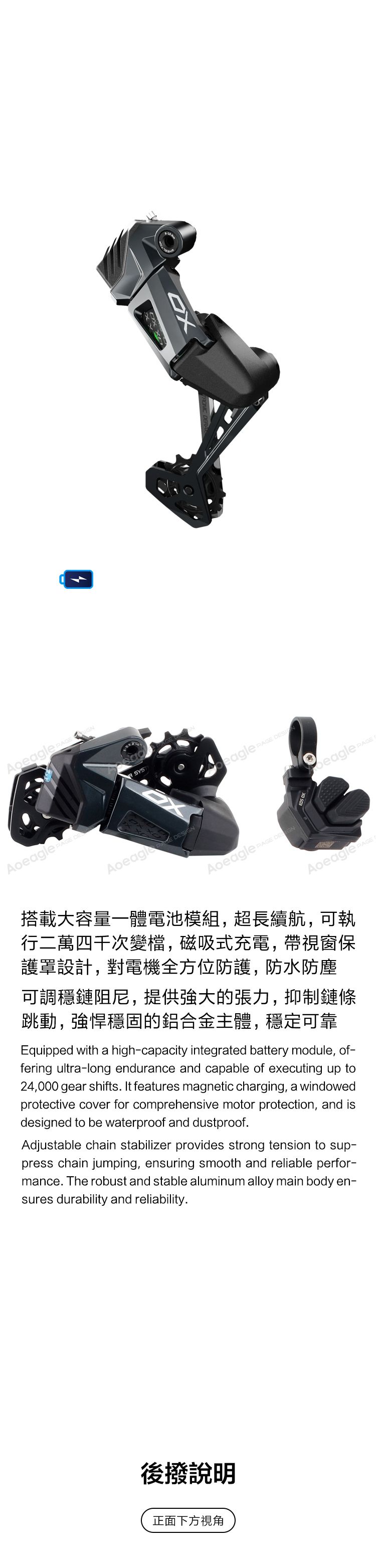
Nobody talks about the WHEELTOP EDS bikepacking wireless derailleur setup the way they should. You hear plenty about AXS on gravel stages and Di2 on loaded touring rigs, but the EDS OX 2.0 has been quietly doing real work out on multi-day trails — and once you understand a few bikepacking-specific quirks, it's a genuinely compelling choice. The price alone removes a barrier that used to mean choosing between nice bags and a nice drivetrain. Now you don't have to pick. That said, running any electronic derailleur on an overnight or multi-day route requires a bit more planning than just bolting it on and pedaling into the woods. This guide covers everything: battery strategy, weather protection, muddy trail behavior, and cassette compatibility for the loaded climbing that bikepacking actually demands. We've done the overnight miles. Here's what we learned.
Carrying a Spare Battery: The Multi-Day Strategy
This is the first thing most people ask about, and honestly it's the easiest problem to solve — once you stop overthinking it. The OX 2.0 uses a removable 400mAh lithium battery that WHEELTOP rates at roughly 60 hours of riding. In our testing on loaded bikes over mixed terrain, we saw closer to 45-50 hours, which is still exceptional. But for a four-day route? You do the math. Carrying one spare battery adds almost nothing to your pack weight — the cell is tiny. Slip it into your top tube bag and forget it's there. Swap takes about 20 seconds. Compare that to the cable-and-port charging dance you deal with on some competing systems, and the replaceable battery starts looking like a feature rather than a compromise. If you want a deeper look at real-world runtime numbers, WHEELTOP Wireless Derailleur Battery Life: How Long Does It Really Last? breaks down the data across different riding conditions.
Charging via Power Bank on the Trail
Here's the thing: you can also charge the OX 2.0 in situ using the magnetic charging connector and a standard power bank — no need to remove the battery at all. This is useful on longer evenings at camp when you have time to let it top up. A 10,000mAh power bank will fully charge the derailleur battery multiple times over. The magnetic connector seats firmly and doesn't wiggle loose if the bike tips against a tree. Just don't leave it plugged in during riding — the cable is fine for static charging but wasn't designed to dangle under load. Tuck it into a framebag pocket at camp, connect the bank, done.
Waterproofing Tips for Wet Trail Conditions

The OX 2.0 carries an IPX6 water resistance rating, which means it handles sustained rain and spray without complaint. We rode through a proper overnight downpour on a recent route through the Cascades and the derailleur didn't miss a beat the following morning. That said, IPX6 is not submersion-proof, so if you're crossing creeks above axle depth on a loaded rig, common sense applies — the derailleur will likely be fine, but the charging port and battery contact area deserve a closer look afterward. Wipe them dry before connecting anything. The magnetic connector itself sheds water well by design; there's no exposed port to trap moisture. Worth noting: the wireless shifter pods are equally well-sealed, and because there are no cables running to the derailleur, there's no housing to retain grit-laden water the way a mechanical system does after a deep crossing.
Mud and Debris Handling: Electronic vs Mechanical Shifting
This is where bikepacking riders get genuinely surprised. Mechanical shifting degrades progressively in mud because the cable tension that drives the derailleur also changes as housing packs with grit. You compensate with barrel adjuster tweaks, you know the feeling. The WHEELTOP EDS bikepacking wireless derailleur sidesteps most of that. Motor-driven positioning means the derailleur moves to an electronically defined point rather than responding to how cleanly a cable can pull. Mud on the parallelogram? The motor compensates with a level of consistency a cable can't match. Heavy clay trails can slow the mechanism slightly — nothing dramatic, but a shift that normally completes in under 100ms might feel fractionally softer. A quick rinse at a stream crossing brings it right back. The one genuine weakness: heavy mud packed around the jockey wheel cage. Same as any derailleur. Keep it moving and it clears itself.
Cassette Compatibility for Loaded Climbing
Bikepacking a loaded bike up sustained climbs is a specific kind of suffering, and your gearing needs to reflect that. The OX 2.0 is compatible with 11-speed cassettes up to 52T, and that upper range matters enormously when you're carrying 10kg of gear up a 15% gravel climb at the end of a long day. In practice, a 46T or 50T largest cog paired with a 30T or 32T chainring gives you a sub-1:1 ratio that makes loaded ascending survivable. If you want to dig into exactly which cassette and chain combinations work reliably, WHEELTOP EDS Compatibility Guide: Cassettes, Chains, and Shifters is worth reading before you order anything. The derailleur's extended cage handles the chain wrap at large cog/small ring combinations without ghost shifting — we ran a 11-50T setup across 200 miles of loaded trail without a single unintended shift.
Setting Up the Derailleur for a Bikepacking Build
Installation is straightforward — the derailleur mounts to a standard direct-mount or with a hangar adapter, and initial calibration takes about five minutes through the WHEELTOP app. Do this at home, not trailside. Set your limit screws conservatively for a loaded bike, since the added weight changes how a loaded frame flexes under pedaling torque. Run a few loaded test shifts at the extremes of the cassette before you leave. It's also worth doing a quick calibration check after the first hour of riding on a new setup; the chain seats in and things can settle slightly. For a detailed breakdown of the calibration process, WHEELTOP EDS Shifting Calibration: How to Fine-Tune Your Derailleur walks through it step by step. If you're also considering how the EDS platform performs across different disciplines before committing, WHEELTOP Electronic Shifting for Gravel Bikes: Complete Setup Guide covers adjacent terrain that bikepacking builds often overlap with.
Overnight Ride Takeaway: What Actually Happened
Three days, two nights, roughly 180 miles across mixed gravel and singletrack with a 12kg loaded setup. The WHEELTOP EDS bikepacking wireless derailleur performed without drama — which is exactly what you want from a drivetrain in the middle of nowhere. Battery sat at 60% when we got back. We hit mud, creek crossings, a full night of rain, and one genuinely brutal 18% climb at hour six of day two. Shifted through all of it cleanly. The one thing we'd change: bring a small rag specifically for wiping the battery contacts at camp. Not because anything went wrong, but because damp contact points are a variable worth eliminating. Everything else? It just worked. For the price of entry relative to AXS or Di2, the OX 2.0 earns its place on a serious bikepacking build. Riders we spoke to who made the switch from mechanical systems reported the same thing: the part they thought would be the liability ended up being invisible. That's the goal.
Ready to try it? The WHEELTOP EDS lineup ships worldwide from Aoeagle's eBay store — full warranty included.