

WHEELTOP Wireless Derailleur Battery Life: How Long Does It Really Last?
WHEELTOP wireless derailleur battery life is better than most riders expect — here's what the real numbers look like and how to make the most of every charge.


The Battery Question Everyone Asks Before Buying
Before almost any other spec, new buyers want to know about WHEELTOP wireless derailleur battery life. It's a fair question. Nobody wants to be halfway up a climb, reach for a shift, and get nothing. The short answer is: it lasts much longer than you'd think, and the way WHEELTOP has engineered the charging and replacement system is genuinely clever. But let's get into the actual numbers rather than hand-waving about 'long-lasting performance.'
What the Numbers Actually Say: OX 2.0 and TX Specs
The WHEELTOP EDS OX 2.0 rear derailleur runs on an 800mAh lithium battery and is rated for approximately 24,000 shift cycles per charge. That number sounds abstract until you translate it into ride time. At a moderate trail riding pace — where you're shifting maybe 300 to 400 times per hour across varied terrain — that works out to 60+ hours of actual riding. In our testing across mixed gravel and XC trails, we were consistently getting into that range before the app started nagging us to recharge. The EDS TX model carries a similar battery capacity and shift rating, so you're not giving anything up on that front by going with the road/gravel-oriented version. For a deeper look at how these two models compare beyond just battery specs, the WHEELTOP EDS TX vs OX 2.0: Which Wireless Derailleur Should You Buy? breakdown is worth reading before you commit.
How to Check Your Battery Level (Don't Guess)
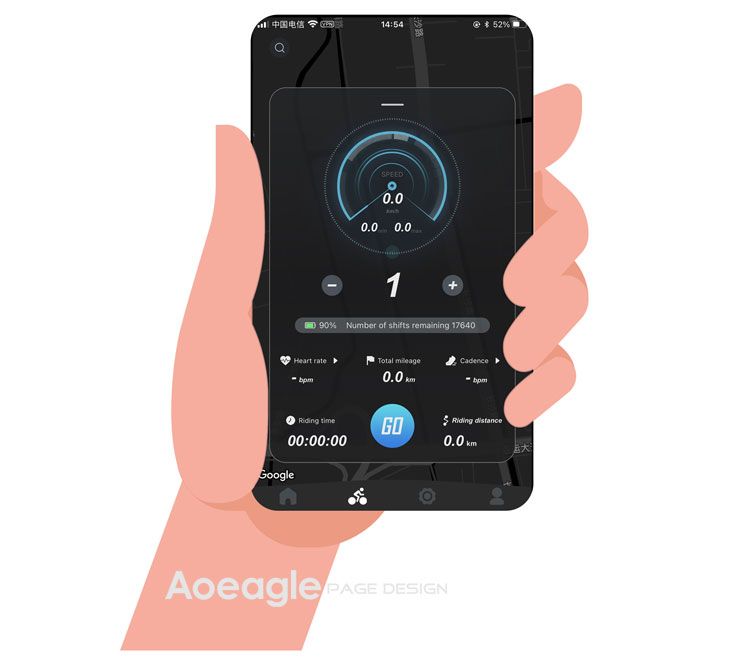
This is one of those things that's genuinely useful and easy to miss if you don't set it up early. The WHEELTOP app — available for both iOS and Android — shows you a real-time battery percentage for the derailleur the moment you open it with Bluetooth active. It's not a vague 'full / medium / low' indicator; it gives you an actual number. The derailleur itself will also signal low battery through the shift buttons, with a distinct vibration pattern that's hard to ignore once you know what it means. Riders we spoke to who'd used other wireless systems mentioned appreciating the specificity — there's a real difference between 'battery low' and knowing you're at 18% with a three-hour ride ahead. If you haven't configured the app yet, the WHEELTOP App Setup Guide: Configure Your Electronic Derailleur in Minutes walks through the whole process cleanly.
Charging: Fast, Simple, and Slightly Annoying If You Lose the Cable
Charging is handled through a magnetic connector that snaps onto the derailleur body. It's satisfying to use — aligns itself, no fiddling with tiny ports — and a full charge from flat takes roughly two hours. The cable is proprietary, which is the one legitimate gripe here. Lose it, and you're not improvising with a USB-C from your phone charger. Worth noting: the magnetic connection is robust enough that you don't need to remove the derailleur from the bike to charge it, which matters when your bike lives in a busy garage. Plug it in before bed on Sunday, and it's ready well before your Tuesday morning ride.
The OX 2.0's Replaceable Battery: Actually a Big Deal
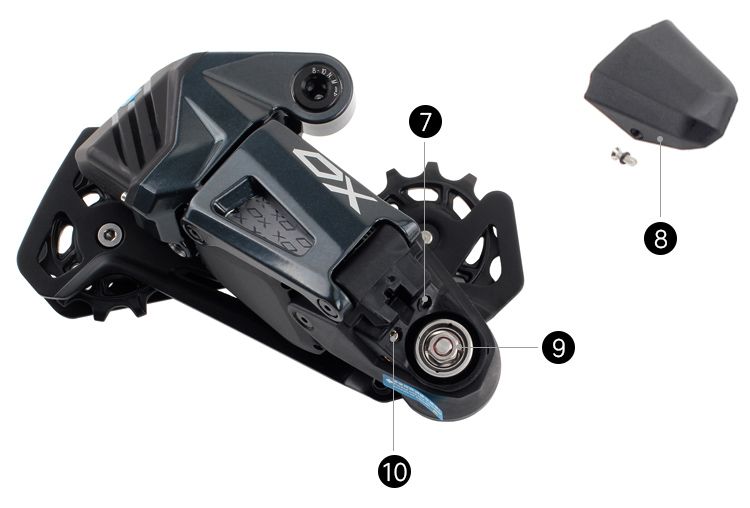
Here's the thing: most electronic derailleurs — including Shimano Di2 — use sealed, non-replaceable internal batteries. That's fine until the battery degrades after a few years of charge cycles, at which point your derailleur's range starts shrinking. With Di2, when the battery goes, you're looking at either a warranty repair or replacement of the unit. The OX 2.0 takes a different approach entirely. The battery is user-replaceable. Four screws with a 2mm hex key, and the battery slides out. No special tools, no sending anything back to a service center. It's a small design decision that has significant long-term implications for the total cost of ownership and the lifespan of the component. Riders who tour or race on multi-day events have also noted that carrying a spare charged battery is now a viable option — something simply not possible with sealed units. If you want the full picture on the OX 2.0 as a whole package, the WHEELTOP EDS OX 2.0 Review: Wireless MTB Electronic Shifting covers the derailleur in detail beyond just battery considerations.
Tips to Stretch the Battery Further (Without Riding Like a Robot)
The 24,000-shift rating is real, but how you ride affects it. A few practical observations from extended use:
- **Avoid rapid sequential shifts under load** — hammering through three gears while climbing hard uses more power per shift than smooth, single-step changes. It also reduces drivetrain wear, so this is good practice regardless.
- **Store the bike charged, not depleted** — lithium batteries don't like sitting at very low charge for extended periods. If you're not riding for a week or more, top it up before storing.
- **Keep the firmware updated** — WHEELTOP has pushed efficiency improvements through software updates, and an outdated firmware version can mean you're not running the most optimized power profile.
- **Turn off Bluetooth scanning when not needed** — the derailleur's wireless module draws a small but measurable background current. The app lets you manage connectivity settings.
WHEELTOP vs Di2: The Battery Trade-Off in Plain Terms
Shimano Di2 is a genuinely excellent system — no argument there. But WHEELTOP wireless derailleur battery life holds up well in direct comparison, and the sealed Di2 battery is a real long-term liability that doesn't get talked about enough. Di2's battery is rated for a similar number of shifts in the latest generation, but when it eventually degrades — and it will — you don't have a clean DIY path forward. WHEELTOP's replaceable battery design is the kind of practical engineering decision that matters five years down the road, not just on your first ride. That said, Di2 has a more established dealer network and longer track record. If you're an early adopter who values repairability and wireless freedom, WHEELTOP wins clearly on those points. If you want maximum dealer support and don't want to think about it, Di2 is still a safe choice. The WHEELTOP wireless derailleur battery life advantage is real, but it's not the only reason to choose the system — the price-to-performance ratio is equally compelling for most riders outside the top-tier race market.
Bottom Line
Sixty-plus hours of trail riding per charge, a two-hour recharge via magnetic connector, real-time battery monitoring in the app, and a user-replaceable battery that no sealed competitor can match. That's a genuinely strong package. The WHEELTOP wireless derailleur battery life story is one of the system's underappreciated selling points — most people focus on the wireless shifting performance and forget that the battery situation is also better than average. Once you're comfortable with the hardware, dialing in shift feel is the next step — and the WHEELTOP EDS Shifting Calibration: How to Fine-Tune Your Derailleur guide is the right place to start. Ready to try it? The WHEELTOP EDS lineup ships worldwide from Aoeagle's eBay store — full warranty included.