

WHEELTOP Electronic Shifting for Gravel Bikes: Complete Setup Guide
WHEELTOP electronic shifting transforms gravel riding. No sticky cables, no mud-packed housing — just clean, reliable shifts wherever the road ends.


Why Gravel Bikes and Electronic Shifting Are a Natural Match

If you've ever returned from a wet gravel ride with shifting so sluggish you were basically single-speeding the last ten kilometers, you already know the problem. Cable housing fills with grit. Ferrules corrode. Barrel adjusters drift. WHEELTOP electronic shifting on a gravel bike cuts through all of that — literally — because there's no cable housing to pack with mud in the first place. The EDS TX runs wirelessly between the shifter and derailleur, so the signal that moves your chain doesn't care whether you just ploughed through a flooded fire road or a loose limestone descent. In our testing across mixed-surface routes, the difference was most obvious in the second half of long rides, exactly when mechanical systems start complaining.
What the WHEELTOP EDS TX Actually Is
The EDS TX is WHEELTOP's wireless rear derailleur aimed squarely at 1x and 2x setups on road, gravel, and light trail bikes. It pairs with a wireless shifter pod — no junction boxes, no wire runs along the frame, no zip-tie archaeology when you want to swap handlebars for bikepacking. The motor inside executes shifts in under 100ms, which sounds like marketing until you're hitting a technical climb and the chain needs to drop two sprockets before the next rock garden. It runs on a replaceable AAA battery rather than a proprietary rechargeable cell, which is a genuinely meaningful decision for anyone planning multi-day routes away from outlets. If you want a deeper look at how the TX stacks up against WHEELTOP's other wireless options, the WHEELTOP EDS TX vs OX 2.0 comparison breaks down exactly which derailleur suits which riding style.
Compatibility With Common Gravel Setups
Here's the thing: most gravel-specific component choices translate directly to EDS TX without drama. The derailleur handles cassettes up to 42T, which covers the most popular gravel configurations — an 11-42T or 10-42T cassette paired with a 40T or 42T chainring gives you a range that's genuinely comfortable on long climbs without feeling spinny on pavement. Running 2x? It works. WHEELTOP's front derailleur integrates into the same wireless ecosystem, so you're not duct-taping two systems together. Worth noting: the system uses a standard 11-speed chain pitch, meaning you're not locked into proprietary consumables. For a full breakdown of what cassettes, chains, and third-party shifters play well with the TX, the WHEELTOP EDS compatibility guide is the most useful single reference.
Recommended Cassette Combinations for Gravel
For most mixed-surface riding, 11-42T is the sweet spot — enough low-end for loaded climbing without excessive jumps between sprockets on flatter terrain. If your routes are primarily flat gravel with occasional short climbs, an 11-36T keeps the steps tighter and cadence more consistent. Riders we spoke to running the EDS TX on bikepacking setups tended to favor the wider 10-42T range specifically because loaded panniers change your effective gearing significantly. The EDS TX handles all of these without needing a separate clutch setting or cage adjustment — the derailleur tension is tuned from the factory for this range.
Setting It Up: The Short Version
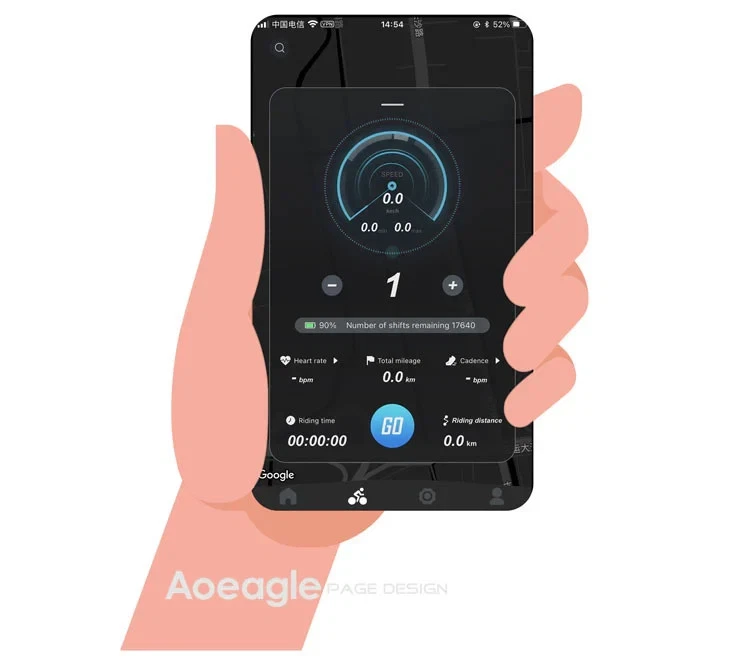
Installation is more straightforward than most cyclists expect the first time. Mount the derailleur to your hanger, snap the shifter pod onto your bar or brake lever clamp, and pair them via the WHEELTOP app — the pairing sequence takes roughly two minutes. Micro-adjustment happens through the app rather than a barrel adjuster, which sounds counterintuitive until you realize you can trim shifting precision by 0.1mm increments while sitting in your kitchen the night before a ride rather than crouching beside your bike in a parking lot. The WHEELTOP EDS TX installation guide covers the full hanger alignment and pairing sequence step by step if you want to go in prepared. That said, if you've installed a mechanical derailleur before, nothing here will surprise you in terms of physical hardware.
WHEELTOP Electronic Shifting on a Gravel Bike vs. Mechanical: The Honest Comparison
Mechanical shifting isn't broken. A well-set-up SRAM Apex or Shimano GRX mechanical groupset shifts cleanly on a dry day and costs less upfront. So why bother? A few real reasons. First, consistency over rough terrain — on cobbles, packed gravel chatter, or washboard dirt, cable tension fluctuates slightly as the housing compresses and rebounds. That's physics. The EDS TX doesn't have housing, so the signal is the same on rough ground as on smooth tarmac. Second, maintenance interval. Mechanical systems need cable trimming, housing replacement, and barrel adjuster tweaks every few thousand kilometers. The EDS TX needs a fresh AAA battery roughly every 500-800km depending on shift frequency and conditions, and that's essentially it. Third — and this matters more than people admit — wireless means no cable runs to reroute when you change handlebars, add a frame bag, or swap stems for a different riding position. For a full cost-versus-performance analysis, the WHEELTOP EDS vs SRAM AXS piece puts the budget and premium wireless options side by side honestly.
Bikepacking-Specific Considerations
This is where WHEELTOP electronic shifting for a gravel bike setup earns its keep most clearly. Bikepacking means bags strapped to every tube, sometimes in locations that would require rerouting cable housing. The wireless shifter pod mounts anywhere you can clamp it — bar end, top tube, stem face — without a single cable run to plan around. The replaceable AAA battery question comes up constantly in bikepacking contexts, and the answer is simple: carry two spares in your feed bag. They weigh almost nothing and you can buy them at a gas station in most countries. Compare that to a rechargeable proprietary battery that needs a specific USB cable and a power bank with enough output — the AAA system wins for remote riding without argument. One practical note from experience: apply a thin layer of electrical grease to the battery contacts before a multi-day trip in wet conditions. It takes thirty seconds and prevents the only real weather-related issue we've encountered.
Is WHEELTOP Electronic Shifting Right for Your Gravel Build?
If you're building a new gravel bike and the budget ceiling is somewhere below full Shimano Di2 or SRAM AXS, WHEELTOP electronic shifting for a gravel bike setup is genuinely the most practical path to wireless performance. The EDS TX brings electronic precision — consistent shift force, programmable multi-shift, wireless freedom — at a price point that doesn't require justifying to anyone. The first thing you notice on a long gravel day is that you stop thinking about shifting at all. It just works, repeatedly, regardless of what the trail throws at it. That's the actual goal, isn't it? Ready to try it? The WHEELTOP EDS lineup ships worldwide from Aoeagle's eBay store — full warranty included.