
WHEELTOP EDS vs SRAM AXS: Budget vs Premium Wireless Shifting
WHEELTOP EDS costs a third of SRAM AXS — but how does the shifting actually compare? Here's what you need to know before spending.
Two Very Different Answers to the Same Question
Wireless electronic shifting used to mean one thing: selling a kidney. SRAM changed that conversation with AXS, and now the WHEELTOP vs SRAM AXS wireless groupset debate is genuinely worth having — because WHEELTOP comes in at a fraction of the cost of SRAM Rival AXS, and the gap in performance is smaller than that price gap suggests. This isn't a spec-sheet comparison. It's an honest look at where each system earns its money and where it doesn't.
Shifting Feel: Closer Than You'd Expect
The first thing you notice with SRAM AXS is how crisp and confident the shift feels underhand — there's a satisfying mechanical snap that tells you the derailleur has moved before you've even looked down. It's genuinely excellent. WHEELTOP EDS is quicker than most people expect, fast enough that you're not consciously waiting for the shift to land. Shifts on flat road and out-of-the-saddle climbs feel responsive and accurate. Where SRAM edges ahead is in tactile feedback from the paddle itself — those chunky AXS buttons have a premium, confident feel that WHEELTOP's smaller levers don't quite match. That said, WHEELTOP's shifting accuracy on a properly indexed drivetrain is genuinely solid. It won't embarrass you on a group ride.
The Price Reality — and What You Actually Get
Let's be direct. SRAM Rival AXSstarts at a premium price point for a rear derailleur and shifters, and a complete groupset with crankset pushes well past that. WHEELTOP EDSputs a complete wireless electronic drivetrain on your bike for a fraction of the price. For riders upgrading a mid-range road or gravel bike — or anyone who simply can't justify the SRAM tax — that difference is the whole conversation. You could buy WHEELTOP EDS, spend the savings on new wheels or a quality saddle, and still come out ahead. If you're unsure whether electronic shifting is even right for you yet, Electronic Bike Shifting Explained: How It Works and Should You Upgrade? is worth a read before committing to either system.
Battery: WHEELTOP's Biggest Practical Win
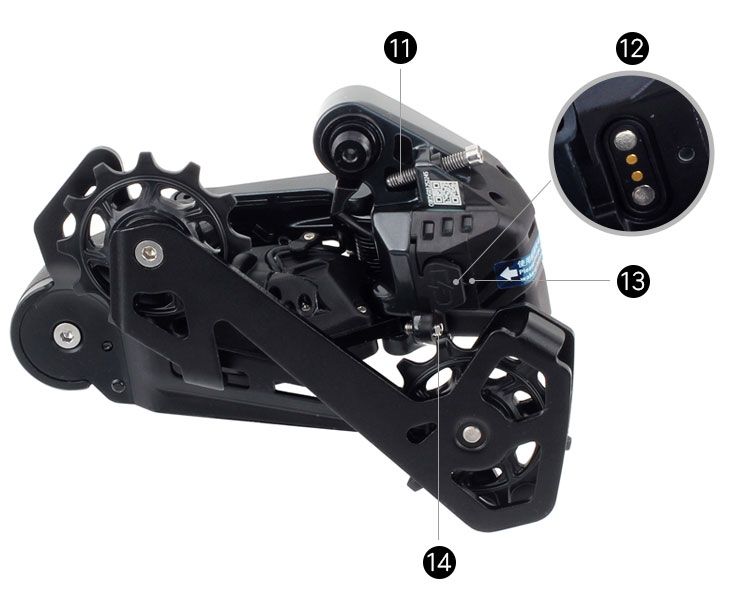
Here's the thing: SRAM AXS uses sealed, integrated rechargeable batteries in both the rear derailleur and front derailleur, plus the brake/shift hoods. WHEELTOP's rear derailleur also runs on a built-in rechargeable 800mAh battery, charged with a magnetic snap-on cable, while the shifters run on CR2032 coin cells that are easy to replace. The full picture on runtime and real-world battery behaviour is covered in WHEELTOP Wireless Derailleur Battery Life: How Long Does It Really Last?, but the short version is: it lasts longer than you'd think.
Compatibility: Where WHEELTOP Has a Sneaky Advantage
SRAM AXS is a closed ecosystem. You use SRAM shifters, SRAM cassettes (XDR driver on road, XD on MTB), and SRAM chains. Mixing brands is either impossible or warranty-voiding. WHEELTOP EDS works with Shimano HG cassettes (8–11 speed), standard chains, and — this is the part that surprises people — existing Shimano mechanical shifters. You can drop a WHEELTOP rear derailleur onto a bike that already has Shimano STI levers and it works. That makes it a genuine upgrade path rather than a full system replacement. Worth noting: cassette compatibility does have some nuance depending on which EDS model you're running, so check the WHEELTOP EDS Compatibility Guide: Cassettes, Chains, and Shifters before ordering.
App Features and Customisation
SRAM AXS App
SRAM's AXS app is polished and genuinely useful. You can remap button functions, set up MultiShift (hold for multiple shifts), monitor battery across every component, and update firmware. The ecosystem integration — especially with Quarq power meters and Garmin head units — is best-in-class. It's the kind of app that makes you feel like you're running a pro-level system, because you kind of are.
WHEELTOP App
WHEELTOP's companion app covers the essentials: limit screw adjustment, index calibration, sensitivity settings, and firmware updates. It's less feature-rich than AXS, but everything important is there. The calibration tools in particular are well implemented — you can fine-tune derailleur position via the app rather than reaching under the bike with a screwdriver. It's functional rather than flashy. For a walkthrough of getting it set up, WHEELTOP App Setup Guide: Configure Your Electronic Derailleur in Minutes covers the process clearly.
Weight and Build Quality
SRAM wins on weight, especially at the flagship Red level, though the gap versus WHEELTOP EDS is marginal enough that most riders won't feel it. The WHEELTOP derailleur body feels robust rather than premium — functional plastics and aluminium rather than carbon-and-machined-everything. It doesn't rattle, it doesn't flex, and it's built to hold up over time. It just doesn't feel like jewellery the way SRAM Red does. Whether that matters to you probably correlates directly with how much time you spend staring at your own bike.
Who Should Buy Which
The WHEELTOP vs SRAM AXS wireless groupset question ultimately comes down to what you're building and what you're willing to spend. Choose SRAM AXS if you want a complete, premium, deeply integrated wireless ecosystem — especially if you're building a high-end road or gravel bike from scratch, want 1x or 2x flexibility with matched front shifting, or the tactile and aesthetic quality of the components genuinely matters to you. The system earns its price. Choose WHEELTOP EDS if you're upgrading an existing bike, you tour or commute, or you simply want reliable wireless electronic shifting without the premium price. It's also the smarter call for a second bike, a training bike, or anyone dipping into electronic shifting for the first time. For a direct look at how WHEELTOP stacks up against Shimano's electronic option too, WHEELTOP EDS vs Shimano Di2: Is Budget Electronic Shifting Worth It? gives that comparison the same treatment. The honest summary: the WHEELTOP vs SRAM AXS wireless groupset debate isn't really about which one is better. It's about whether the performance gap justifies a a substantial price difference. For most riders on most bikes, it doesn't.
Ready to try it? The WHEELTOP EDS lineup ships worldwide from Aoeagle's eBay store — full warranty included.


