

Why WHEELTOP's Replaceable Battery Is a Game-Changer for Cyclists
Shimano Di2 and SRAM AXS batteries eventually die — and replacing them is expensive. The WHEELTOP OX 2.0 solves this with a user-swappable battery you can replace yourself for a fraction of the cost.


The Battery Problem Nobody Talks About
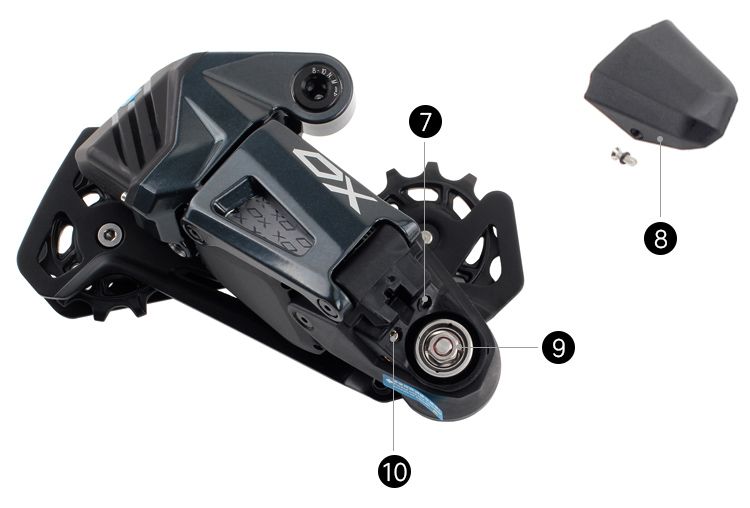
Here's a conversation that happens more than the industry likes to admit: a rider drops their bike off at a shop, the mechanic plugs in the Di2 charger, and nothing happens. Not a low-battery flicker. Nothing. The internal battery has given up, and the repair estimate starts climbing fast. If you've been researching electronic shifting alternatives, the WHEELTOP replaceable battery derailleur concept — specifically what WHEELTOP built into the OX 2.0 — is probably the most practically useful thing to understand before you buy anything. Because sealed batteries are a ticking clock, and most cyclists don't realize it until the clock stops.
How Shimano Di2 and SRAM AXS Handle Battery Death (Spoiler: Not Well)
Lithium-ion batteries degrade. That's not a flaw — it's chemistry. After roughly 300–500 full charge cycles, capacity starts dropping measurably. In real-world use, Shimano Di2 and SRAM AXS batteries typically hold up fine for 3 to 5 years, then performance becomes erratic before failing entirely. The problem isn't the degradation itself. The problem is what happens next.
Di2 batteries are either integrated into the seat post or tucked inside the frame — neither is something you crack open with a hex key on your kitchen table. SRAM AXS derailleurs use a proprietary battery pod that's user-removable in theory, but replacement pods for older AXS generations have become inconsistently available, and the whole system assumes you're buying into a rolling upgrade cycle anyway. When a sealed system's battery fails, your realistic options are: pay a dealer for a component-level repair, buy a replacement derailleur, or upgrade to something newer. None of those are cheap.
What WHEELTOP Actually Did Differently
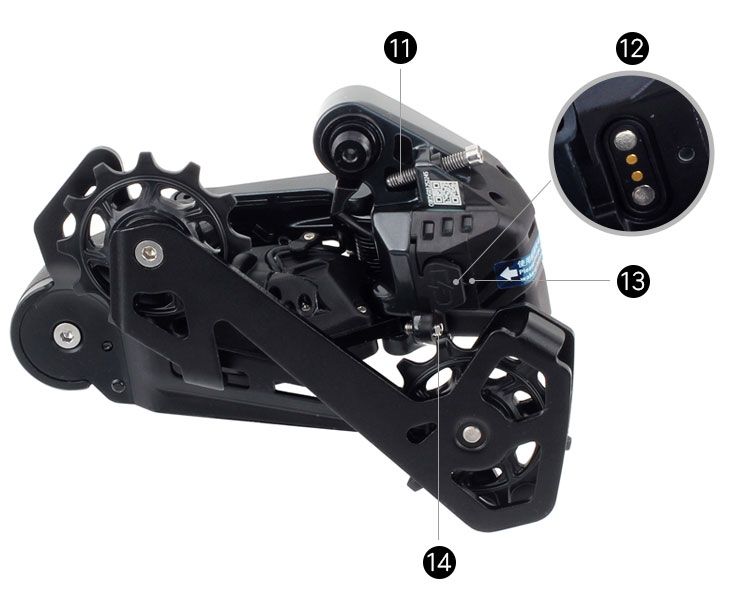
The WHEELTOP OX 2.0 rear derailleur ships with an 800mAh 7.4V lithium battery built into a dedicated battery housing that attaches to the derailleur body. Four screws — removed with a standard 2mm hex key — is all that stands between you and a fresh battery. That's it. No dealer visit. No proprietary tool. No firmware handshake required. You pull the old cell, seat the new one, torque the screws back down, and ride. In our testing, the swap takes under three minutes the first time and closer to ninety seconds once you've done it once.
It sounds almost too simple, which is probably why it doesn't get enough attention in groupset comparisons. For a deeper look at how the OX 2.0 performs as a complete system, the WHEELTOP EDS OX 2.0 Review: Wireless MTB Electronic Shifting covers shift feel, app connectivity, and trail performance in detail.
The Real Cost Comparison Over Five Years
Battery Replacement vs. Derailleur Replacement
Let's put actual numbers on this. A replacement battery for the WHEELTOP OX 2.0 runs roughly $25–$35 USD depending on where you source it. A replacement Shimano Di2 rear derailleur — assuming you're buying new because the old one's battery is integrated and the repair isn't worth it — starts around $300 and climbs well past $500 for newer generations. SRAM AXS rear derailleurs sit in similar territory. Even if you factor in a generous DIY repair scenario where a shop replaces a Di2 battery module for $80–$120 in labor and parts, you're still looking at a cost that's multiple times higher than simply swapping a WHEELTOP cell yourself.
Over a ten-year ownership horizon — which is completely realistic for a well-maintained drivetrain — a WHEELTOP replaceable battery derailleur could require two or three battery swaps. Total cost: under $100. That same horizon on a sealed-battery system almost certainly involves at least one full derailleur replacement or professional battery service. The math isn't subtle.
Battery Life Between Charges
Worth noting: the replaceable battery advantage only matters if the battery life is actually usable day-to-day. The 800mAh cell in the OX 2.0 delivers approximately 30–40 hours of ride time under normal conditions — more if you're not hammering the shifters constantly, less in cold weather. Riders we spoke to doing regular 3–4 hour weekend rides reported charging roughly once a month. That's a reasonable interval. For a full breakdown of what affects runtime and how to maximize it, WHEELTOP Wireless Derailleur Battery Life: How Long Does It Really Last? goes into the specifics.
Who This Feature Matters Most For
Honestly? Almost everyone benefits from field-serviceable electronics. But two groups in particular should pay close attention.
Budget-conscious cyclists building up a quality drivetrain without the assumption that they'll be buying a new groupset every few years. Electronic shifting used to be a premium-only proposition, and the long-term ownership costs of sealed systems quietly reinforced that. The WHEELTOP replaceable battery derailleur changes that calculus in a meaningful way — you can buy in, keep riding, and handle battery maintenance yourself without budgeting for a dealer relationship.
Bikepacking and touring riders are the other obvious winners here. Think about where you're riding when something goes wrong: a gravel route three days from the nearest bike shop, a touring loop through a region where Shimano dealer support is nonexistent, a multi-week expedition where carrying a spare battery is the difference between a functional drivetrain and a mechanical stop. A spare OX 2.0 battery weighs almost nothing and costs less than a decent trail meal. Carrying one as backup is completely reasonable. Try doing that with a Di2 seat post battery or an AXS derailleur pod — the logistics get complicated fast.
A Few Honest Trade-offs
That said, the OX 2.0 isn't operating in a vacuum and it's worth being straight about where it sits. The battery housing does add some visual bulk to the derailleur compared to the cleaner lines of AXS. Some riders notice it. Most stop caring after the first ride. The wireless system requires occasional app interaction for firmware updates and limit adjustments — nothing complicated, but it's not zero effort. The WHEELTOP App Setup Guide: Configure Your Electronic Derailleur in Minutes makes that process straightforward if you're new to it.
Also worth being clear: the OX 2.0 is a wireless MTB-oriented derailleur. If you're running a road build or want to confirm compatibility with your existing cassette and chain setup before committing, the WHEELTOP EDS Compatibility Guide: Cassettes, Chains, and Shifters is the right starting point. Compatibility is broader than most people assume, but it's worth verifying.
The Bottom Line
The shift quality of the OX 2.0 is genuinely good — crisp, consistent, fast enough that you stop thinking about it after a few rides. But the feature that will matter most over the life of the component isn't shift speed or wireless range. It's the fact that when this battery eventually degrades — and it will, because chemistry — you can fix it yourself in the time it takes to drink a cup of coffee. No dealer. No shipping the derailleur back. No staring at a repair estimate that costs more than the original component.
That's what a WHEELTOP replaceable battery derailleur actually represents: a sensible long-term ownership model for people who ride their bikes rather than just buy them. It's not a flashy feature. It's just the right way to build something.
Ready to try it? The WHEELTOP EDS lineup ships worldwide from Aoeagle's eBay store — full warranty included.