
WHEELTOP EDS OX 2.0 Review: Wireless MTB Electronic Shifting
Our updated WHEELTOP EDS OX 2.0 review covers real trail performance, battery life, cage options, and whether this budget-friendly derailleur genuinely rivals premium systems in 2026.
This WHEELTOP EDS OX 2.0 review looks at rooty singletrack, loose gravel climbs, and the kind of wet weekends that expose any drivetrain's weak spots. The short verdict: the OX 2.0 still punches well above its price class in 2026, and a handful of meaningful refinements since launch have made it more compelling than ever. Everything below is the full breakdown.
Why Budget Electronic Shifting Is No Longer a Compromise
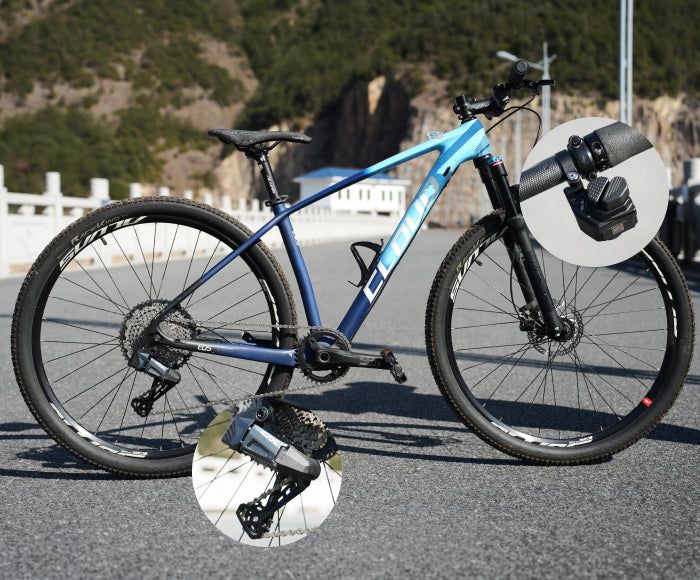
Electronic shifting used to mean spending serious money. Full Shimano Di2 builds and SRAM AXS Eagle groupsets sit well into four figures. The WHEELTOP EDS OX 2.0 costs a fraction of that for the derailleur alone, which immediately raises the question every experienced rider asks: what did they cut to get there? The answer is more nuanced than the price tag suggests. If you want the broader context before diving in, Electronic Bike Shifting Explained: How It Works and Should You Upgrade? is a solid starting point.
What the WHEELTOP EDS OX 2.0 Actually Is
WHEELTOP is a Chinese drivetrain brand that has spent several years quietly developing wireless electronic groupsets, and the EDS OX 2.0 is their current flagship MTB rear derailleur. It is fully wireless, battery-powered, and app-controlled via Bluetooth. It's heavier than a top-tier Di2 unit, but the weight is entirely reasonable for a system at this price point and with this feature set. The derailleur handles 3 to 14-speed configurations, an unusually wide compatibility window that makes it genuinely useful for riders building custom drivetrains or working with mixed-era components. For a direct comparison with the premium competition, WHEELTOP EDS vs Shimano Di2: Is Budget Electronic Shifting Worth It? lays out the trade-offs clearly.
- Wireless communication between derailleur and shifter pods — no cables, no housing
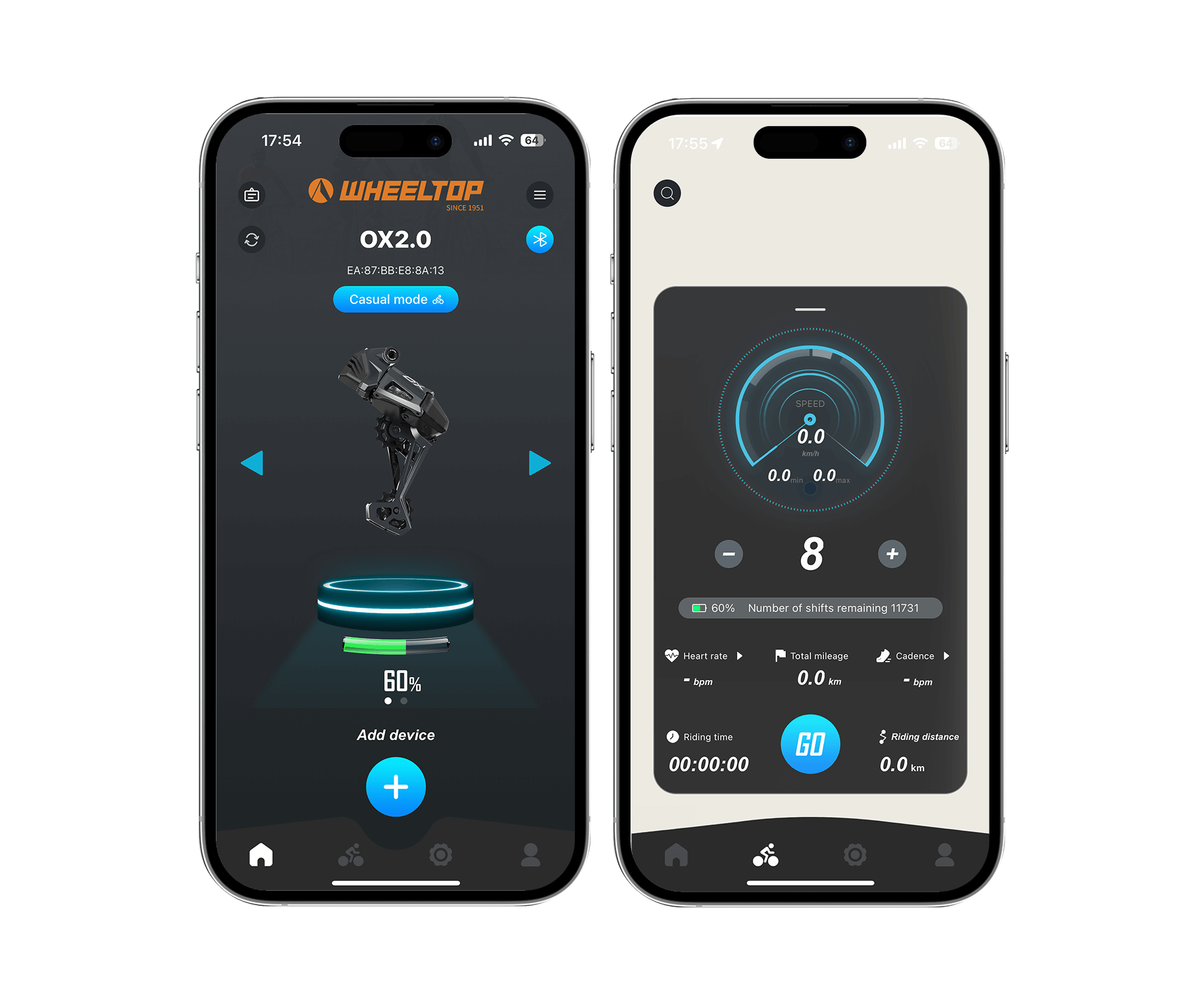
- Bluetooth app connectivity for setup, calibration, and battery monitoring
- Compatible with 3 to 14-speed drivetrains across multiple cassette standards
- Three cage lengths: 58mm short, 75mm medium, 93mm long
- Built-in 800mAh, 7.4V rechargeable lithium battery — magnetic snap-on charging
Battery Life: Long Runtime, Simple Magnetic Charging
The 800mAh, 7.4V battery delivers a long runtime per charge — most riders go weeks between charges without thinking about it. Charging is a magnetic snap-on connection with no exposed port to clog with mud, and the app displays a real-time battery percentage at all times, so you are never caught off guard mid-descent. For a deeper look at how longevity compares across real-world conditions, WHEELTOP Wireless Derailleur Battery Life: How Long Does It Really Last? covers the data thoroughly.
Cage Options, Compatibility, and Drivetrain Mixing
The three cage lengths — 58mm short (10-32T), 75mm medium (10-42T), and 93mm long (10-52T) — cover essentially every realistic MTB build scenario. The medium cage comfortably handles the most common builds, up to a 10-42T cassette, without issue. The long cage opens the door to wide-range cassettes up to 52T and is worth considering if you are running a particularly slack or heavy bike where that low-end gear matters. One underappreciated aspect of the OX 2.0's wide speed-range compatibility is how well it works for riders mixing older drivetrains with newer cassettes. The WHEELTOP EDS Compatibility Guide: Cassettes, Chains, and Shifters is the most useful single resource if you are trying to figure out whether your existing components will play nicely together.
App Setup, Calibration, and the 2026 Firmware Update
The WHEELTOP app has improved meaningfully over the past year. Initial pairing is faster, the calibration interface is cleaner, and a 2026 firmware update introduced micro-adjustment sensitivity settings that let you dial in shift feel more precisely than before — particularly useful when running non-standard cassette and chain combinations. Shift response stays fast and consistent across a wide temperature range, competitive with systems costing three times as much. For anyone setting up the system for the first time, the WHEELTOP App Setup Guide: Configure Your Electronic Derailleur in Minutes walks through every step without assuming prior electronic shifting experience. Once the system is running, WHEELTOP EDS Shifting Calibration: How to Fine-Tune Your Derailleur is the resource to bookmark for ongoing adjustments.
Trail Performance: What Six Months of Riding Actually Revealed
Mud-packed trails in autumn. Deep puddles. Sandy fire roads that get into every mechanical interface — these are the conditions that reveal whether a derailleur is genuinely well-built. The wireless design means there's no cable housing to pack with grit, and the motor doesn't care whether the parallelogram is coated in mud. Ghost shifts on this class of derailleur usually trace back to a worn chain rather than the derailleur itself — worth checking first if you see one. The clutch mechanism, which is increasingly important as trail bikes run longer travel and more aggressive geometry, is built to engage consistently and hold chain tension through rough, high-speed sections without the rattle that cheaper mechanical systems produce. WHEELTOP's 2026 firmware update also targeted cold-weather performance, aiming for crisper shifts at low temperatures for riders who extend their season into winter conditions.
Who Should Buy the WHEELTOP EDS OX 2.0 in 2026?
The OX 2.0 makes the most sense for three specific types of rider. First, the experienced trail rider who wants electronic shifting's core benefits — precision, reliability, no cable stretch — without committing $1,000-plus to a premium groupset. Second, the component-forward builder working with a mixed drivetrain who needs wide speed-range compatibility and app-based fine-tuning. Third, the environmentally conscious rider who finds the idea of throwing away a perfectly good derailleur because of a sealed, degraded battery genuinely frustrating — and wants a system designed for long-term ownership instead. For riders still deciding between WHEELTOP's own lineup, WHEELTOP EDS TX vs OX 2.0: Which Wireless Derailleur Should You Buy? makes the choice straightforward. The OX 2.0 is not trying to beat Di2 or AXS at their own game. It is making a different argument: that most riders do not need to spend flagship money to get flagship-level shift quality on the trail. After everything covered in this WHEELTOP EDS OX 2.0 review, that argument holds up.
Ready to try it? The WHEELTOP EDS lineup ships worldwide from Aoeagle's eBay store — full warranty included.


