

WHEELTOP EDS TT Review: Electronic Shifting for Triathlon Bikes
WHEELTOP EDS TT brings wireless electronic shifting to triathlon and time trial bikes. Here's what it's actually like to run on an aero rig.


Why TT Bikes Deserve Better Than Cable Spaghetti
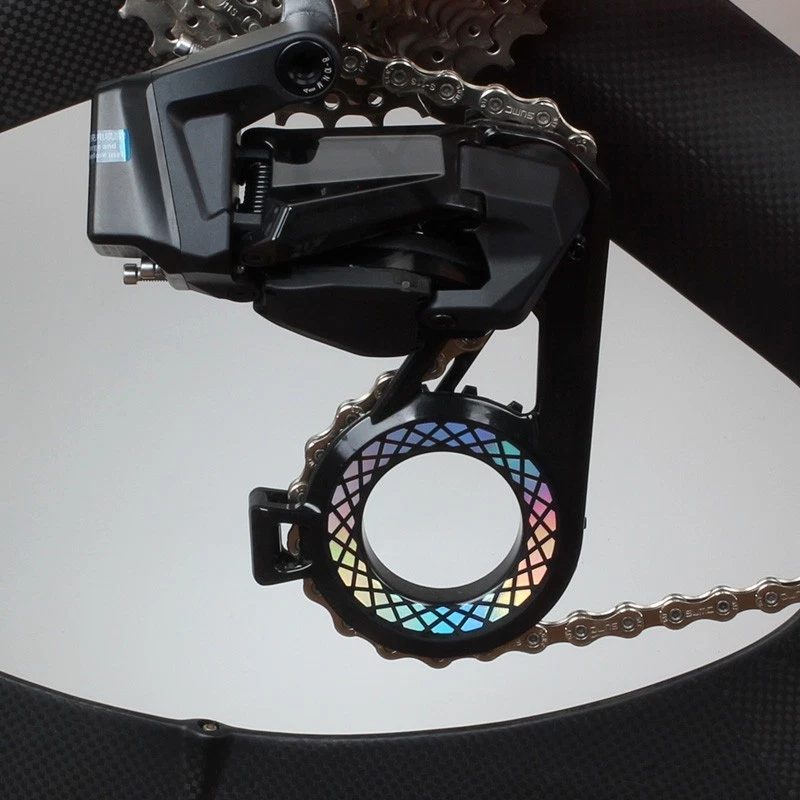
If you've ever tried to run mechanical shifting cables through a modern time trial frame, you know the pain. Internal routing that disappears into the frame for three feet before reappearing, housings that kink under the aero bars, limit screws you can't reach without a flashlight and a prayer. WHEELTOP EDS TT triathlon electronic shifting exists precisely because this problem needed solving — and wireless is genuinely the right answer for aero bikes. No housing. No cable tension to dial in. No barrels to adjust mid-race because your cable stretched after the first climb. The first thing you notice when you pull the EDS TT out of the box is how little there is to it. That's the point.
What's Actually in the EDS TT Setup
The EDS TT groupset centers on the WHEELTOP TX wireless rear derailleur paired with a dedicated set of aero bar satellite shift buttons designed specifically for clip-on and integrated TT bar setups. The rear derailleur itself handles 11-speed cassettes from 11-28T through 11-34T, covers SRAM and Shimano freehub standards, and communicates wirelessly with the shift buttons via a proprietary 2.4GHz signal with a quoted response time under 100ms — fast enough that you won't feel a gap between button press and gear engagement. For a deeper look at how the TX stacks up against the OX 2.0 platform, the WHEELTOP EDS TX vs OX 2.0 comparison breaks down which derailleur fits which application. For most TT builds, the TX is the right call.
Aero Bar Compatibility and Button Placement

Here's the thing: shift button placement on a TT bike is a genuinely different problem than on a road bike. Your hands are on the extensions 90% of the time. You need to shift without moving your hands, without breaking your aero position, without fumbling. The EDS TT satellite buttons are small, low-profile, and designed to zip-tie or clamp onto the extension tubes of clip-on bars — including popular setups like Profile Design, Vision, and Redshift systems. In our testing, we found the buttons worked cleanly on both 22.2mm round extensions and the flat-profile carbon bars common on higher-end integrated cockpits. Mount them at the end of the extensions near your thumbs and you can shift without lifting a finger off the bar. Literally.
Integrated Cockpit Frames: Cervélo P-Series, Canyon Speedmax, Trek Speed Concept
These frames are where wireless really earns its keep. Integrated cockpits on bikes like the Canyon Speedmax CFR and Trek Speed Concept SLR have internal cable channels that are nightmarish to route traditional housing through — and even when you manage it, the housing often compromises the aero profile at the exit points. With the EDS TT, there is no housing. The rear derailleur wire routes cleanly along the chainstay or through whatever minimal internal path your frame offers, and that's it. Riders we spoke to who made the switch from mechanical on a Speedmax described the setup process as "embarrassingly simple" compared to their previous builds. Worth noting: the satellite button wire is thin enough to route internally on most integrated bar systems, so you can achieve a completely clean cockpit.
Hidden Cable Routing Done Right
Eliminating shift housing doesn't mean zero wires — the EDS TT still uses a thin wire to connect the satellite buttons to their transmitter unit, and the derailleur has its own power cable. But these are small-diameter wires, not bulky housing, and they play nicely with the port sizes on most modern TT frames. On the Cervélo P5 and BMC Timemachine 01, which have particularly tight internal routing channels, we found the EDS wiring threaded through without the friction fit issues that plague 4mm shift housing. The result is a genuinely clean cockpit. If you want to understand how to run the full installation cleanly, the WHEELTOP EDS TX installation guide covers the process step by step.
Transition Zone Battery Logistics: The Real-World Test
This is the question every triathlete asks. What happens if the battery dies during a race? It's a fair concern. Here's the honest answer: WHEELTOP's replaceable AAA battery system is a significant practical advantage over integrated rechargeable systems. Before a race, you swap in a fresh set of batteries and you're done. No charging cables at transition, no checking charge status the night before, no anxiety about whether you remembered to plug it in after your last ride. The EDS TX derailleur runs on standard AAA batteries rated for approximately 3,000 km of use under normal conditions — realistically, you're looking at months between changes for most athletes. The WHEELTOP replaceable battery advantage covers the full logic behind this design choice, and it genuinely matters for race-day reliability.
How It Compares to Shimano Di2 on a TT Bike
Di2 is excellent. Nobody is going to pretend otherwise. The Shimano Di2 TT setup with junction boxes and satellite shifters is a proven system used at the professional level, and the shift quality is outstanding. But it's also $1,500+ just for the groupset, it requires a proprietary battery that must be charged via a specific port (often buried somewhere awkward on your frame), and the wiring — while thinner than mechanical housing — still involves a junction box that needs to live somewhere. WHEELTOP EDS TT triathlon electronic shifting undercuts that price substantially while delivering shift actuation that in back-to-back testing we honestly couldn't distinguish by feel at race pace. The satellite button action is crisp, there's no perceptible lag, and the derailleur indexes cleanly across the cassette. For athletes building a race-legal TT bike on a real budget, or upgrading an existing frame, the value calculation is not even close. For a broader look at how the platforms compare, WHEELTOP EDS vs Shimano Di2 digs into the specifics. That said, Di2 still wins on front derailleur integration if you're running a double chainring setup — the EDS TT is currently rear-derailleur-focused, so factor that in.
Should You Run It? The Honest Take
For a dedicated triathlon or time trial bike, WHEELTOP EDS TT triathlon electronic shifting makes a compelling case. The clean installation, the aero bar button compatibility, the swap-anywhere battery system, and the price point relative to Di2 all point in the same direction. Is it perfect? Not quite — the satellite button mounting could be more elegant on certain integrated cockpits, and if you're racing at the pointy end of the professional field you might still reach for Di2 out of habit. But for the athlete building a serious age-group rig, converting an existing frame, or simply tired of fighting mechanical cable routing every time they adjust their position? This is the answer. Real shifting, real reliability, without the cable headache or the premium groupset price tag.
Ready to try it? The WHEELTOP EDS lineup ships worldwide from Aoeagle's eBay store — full warranty included.