
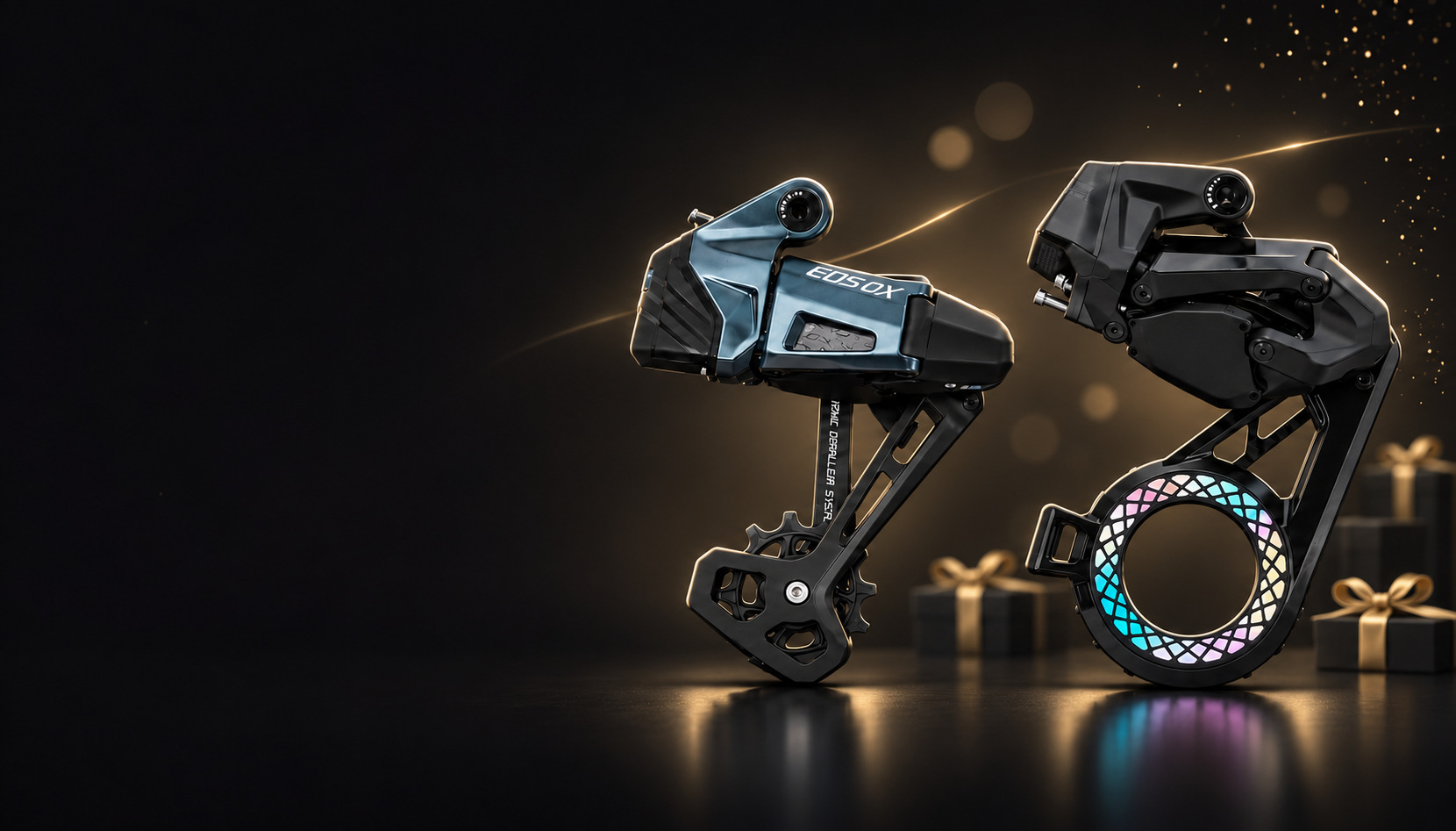
WHEELTOP EDS OX 2.0 Downhill Stop Pin Fix by Does It Track
What the video covers
Does It Track puts the WHEELTOP EDS OX 2.0 wireless rear derailleur on a Specialized downhill bike. The creator chose the shortest cage available to see whether a budget wireless unit can work on a DH bike.
The video starts with a quick look at the derailleur and the shifter. Most of the video covers a problem that shows up during the first test fit. The derailleur's built-in stop pin lets the body swing too far toward the frame. The creator moves that pin, sets the limit screw and checks the shifting with the app.
First impressions on the bench
The creator says the unit looks well made and solid. He also says the clutch feels fairly stiff. He plans to film it in slow motion later to check chain droop. He tests a few metal parts with a magnet and finds they are non-ferrous, so he guesses they are aluminum.
He likes the waterproof charging port and its magnetic plug, which has an LED that lights during charging. He also points out that the cable is proprietary, so losing or damaging it would be a real problem. The shifter has a hinged clamp, so he can mount it without taking off his grips. He thinks this is one of the 2.0 updates. He says the derailleur arrived already 75% charged, and the clicky, positive buttons get his approval.
The problem: stop pin position on a downhill frame
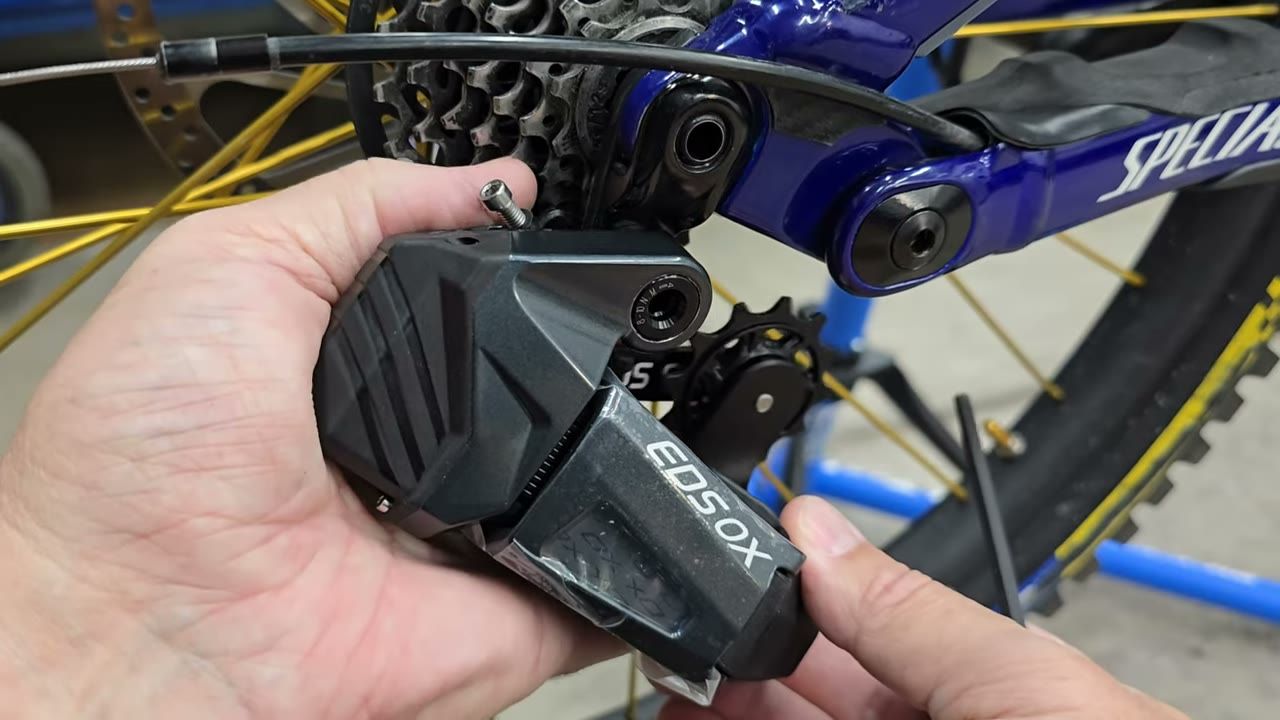
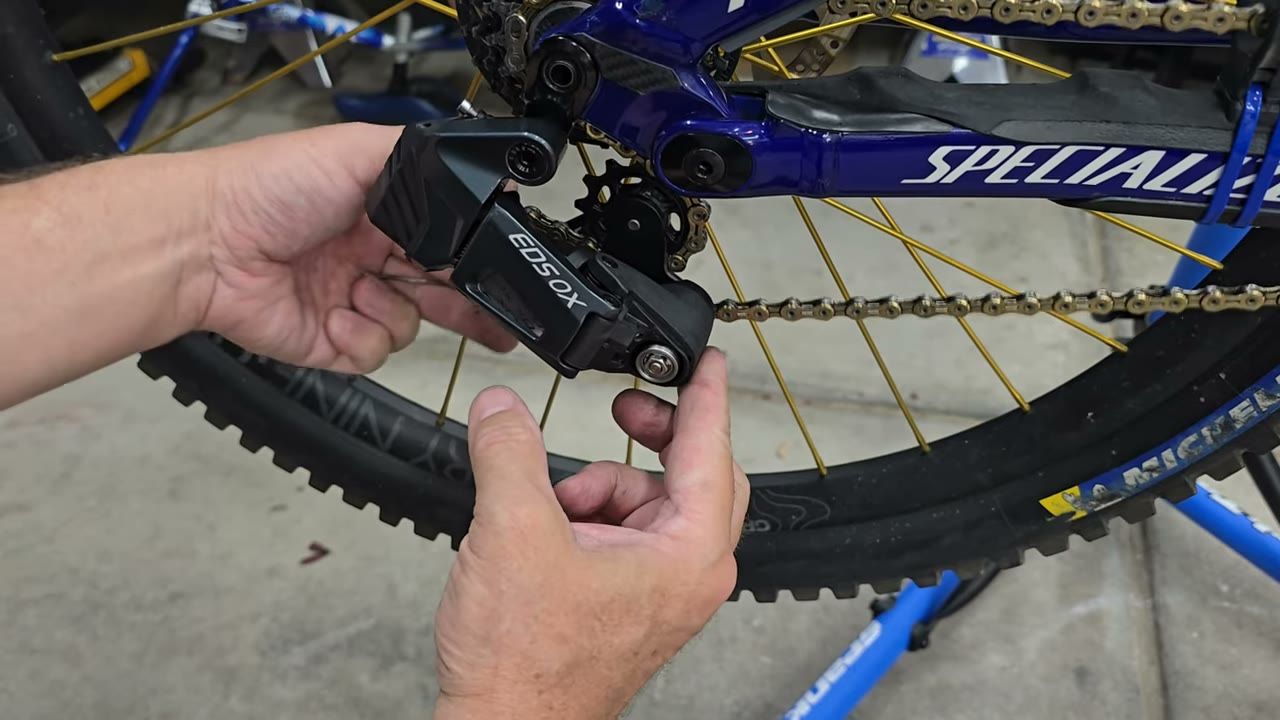
The creator notes that the derailleur doesn't come with thread lock on the mounting bolt, so he treats the first install as a test fit. When he lets the derailleur rotate back into position, it swings right into the frame.
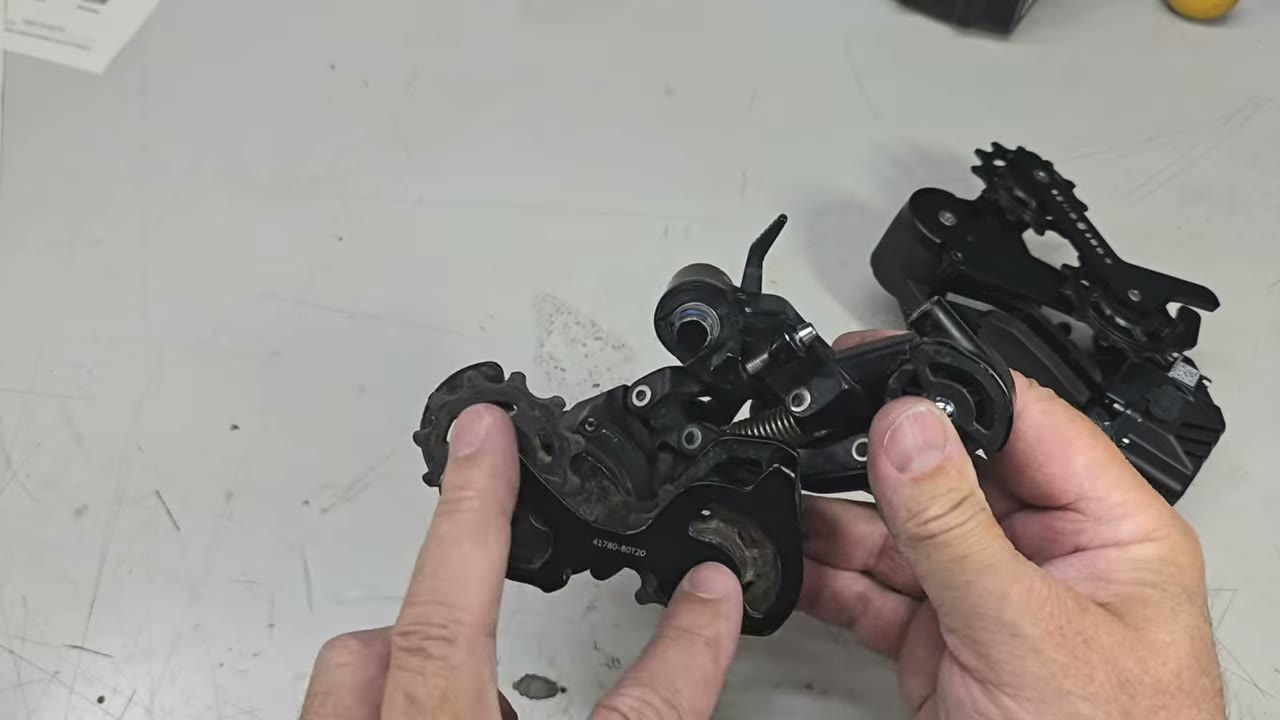
He compares it with a TRP DH7 downhill derailleur. The TRP has a stop pin that catches the body before it rotates too far. On the EDS OX, the matching pin sits much lower. If the chain came off, the derailleur could rotate up into the cassette and hit the frame. He says it can't be positioned out of the way and suspects the unit wasn't designed with downhill bikes in mind.
Relocating the stop pin
He explains that he isn't changing how the derailleur works. He only wants it to stop a few millimeters sooner, more like a dedicated downhill derailleur. The original pin threads in and comes out with an Allen key. Then he slowly unwinds the spring tension so nothing pops out.
He marks the new location with a scratch awl and a center punch. Then he drills and taps a new hole and reinstalls the same pin. He says the original thread is 4 mm x 0.70. The new spot is still on the same flat area of the part, and he wonders why it wasn't put there from the start.
Limit screws, app setup and the remote
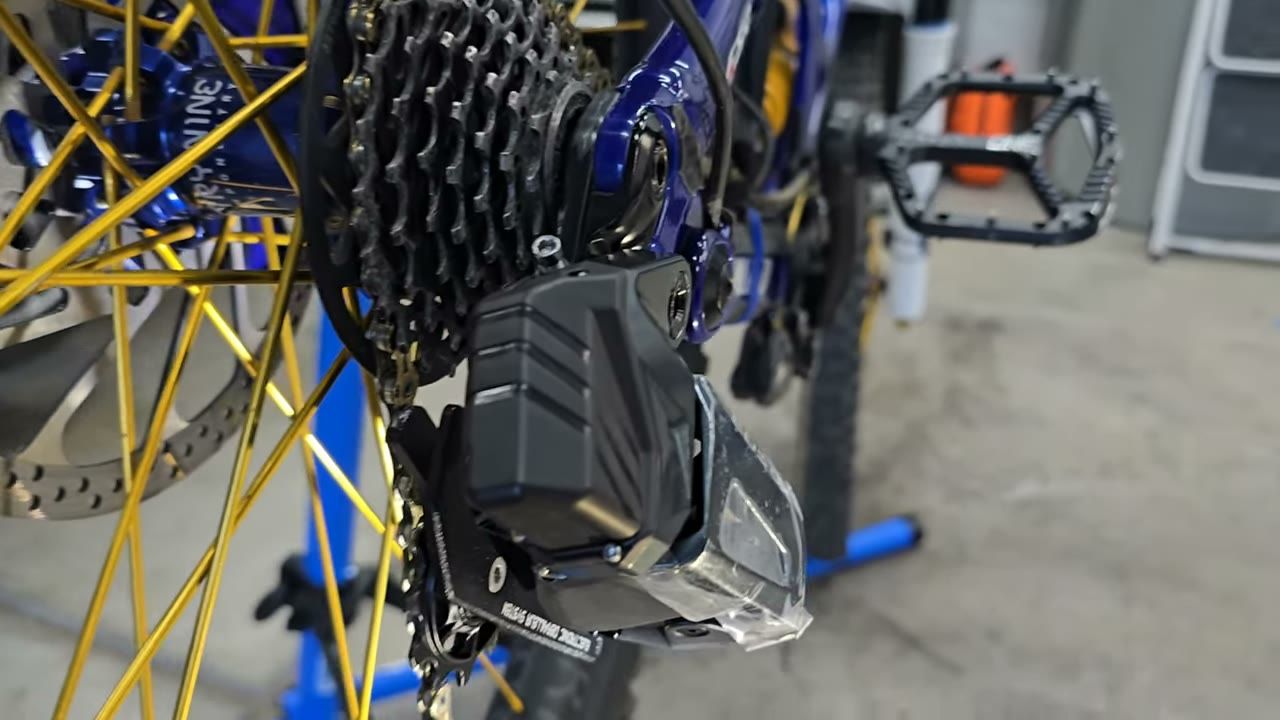
Once the derailleur is remounted, the creator says the result is much better than before. It clears the frame, doesn't catch, and still leaves some B-screw adjustment. He says he plans to add Loctite now that the fit is confirmed.
To reach the first limit adjustment, he removes a small screw and slides a cover forward. Turning clockwise moves the derailleur in, and turning counterclockwise moves it out. He backs it out slightly and checks that it shifts fully up and down. He set the derailleur to seven-speed in the app and made a few small adjustments there, which he calls easy. He may also add some clutch tension for downhill riding. He likes how the mounted shifter sits well out of the way of his hand.
Things to keep in mind
Drilling and tapping the derailleur is the creator's own modification and takes the right tools. He did it to protect a downhill frame if the chain comes off, not because shifting was a problem. Riders on trail or other bikes may not have the same clearance issue.
He also recommends taking good care of the proprietary charging cable and adding thread lock to the mounting bolt, since none comes on it. The video ends before the ride, so it doesn't show how the derailleur performs on the trail.
Verdict
Does It Track calls the WHEELTOP EDS OX 2.0 a nicely built wireless derailleur that is easy to set up in the app. He praises the hinged shifter, the positive buttons and the charge level out of the box. His main concern is the stop pin position on a downhill frame. In his view, moving the pin a few millimeters fixes it and lets him run the derailleur with much more confidence.
This article is based on Does It Track's video. Watch the original video above, published 4 November 2026.


